
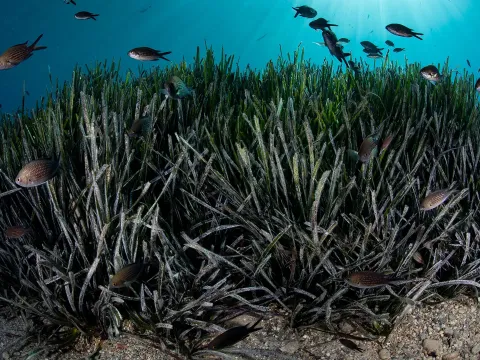
Posidonia
Posidonia
Posidonia is a genus of aquatic plants belonging to the Posidoniaceae family. Often referred to as seagrass, it is not a seaweed but a true flowering plant with roots, stems, and leaves that completes its life cycle entirely underwater.
What the section contains


Posidonia
The plant requires high water clarity and significant sunlight to perform photosynthesis, limiting its distribution to clear, shallow coastal areas. It anchors itself firmly to the seafloor using a complex system of rhizomes that can extend several meters into the sediment.
Temperature stability is vital for Posidonia oceanica, with optimal growth occurring in typical Mediterranean conditions. It is extremely sensitive to changes in water turbidity and nutrient levels, making it a primary biological indicator of water quality.
Its botanical structure includes strap-like leaves that grow in dense clumps, providing vital habitat for thousands of marine species. These meadows function as significant carbon sinks, sequestering carbon dioxide from the atmosphere into the seabed sediment.
Growth of the plant is remarkably slow, meaning that once a meadow is destroyed, its natural recovery process can take many decades. This slow life cycle makes the preservation of existing beds a top priority for marine conservation efforts worldwide.
While not a traditional agricultural crop, the dry leaves of Posidonia that wash up on beaches are harvested as a sustainable raw material. This naturally shed biomass is collected and processed for use in eco-friendly construction materials and thermal insulation.
Recent technological advancements have enabled the use of Posidonia fibers in the production of sustainable paper and high-quality bio-packaging. This industry transforms beach litter into valuable assets while helping maintain clean coastal environments for tourism.
Posidonia beds are under severe threat from mechanical damage caused by boat anchors, bottom trawling, and coastal dredging. These human activities physically destroy the rhizome network and increase water turbidity, preventing light from reaching the plants.
Climate change poses a long-term risk, as rising ocean temperatures increase susceptibility to diseases. Furthermore, invasive species, such as specific non-native algae, outcompete the seagrass for space and light, significantly reducing the density of original meadows.