
Chinese rhubarb
Rheum officinale Baill.
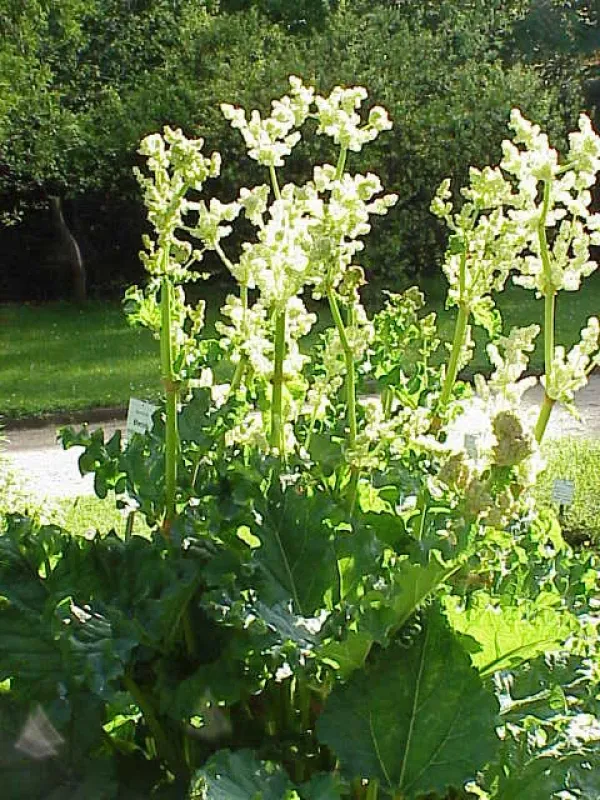
Description
Sowing dates
Chinese rhubarb, botanically known as Rheum officinale and belonging to the Polygonaceae family, is typically propagated via seeds or rhizome division. Sowing should occur in early spring or autumn to ensure proper germination cycles.
When starting from seed, rows should be spaced 60–80 cm apart. Seeds are sown at a depth of 2–3 cm in well-prepared soil. Germination requires consistent moisture, and seedlings grow slowly during their first season.
For vegetative propagation, healthy 4 to 5-year-old mother plants are selected. Rhizomes are divided into segments, ensuring each piece contains at least two strong buds and a healthy root structure for establishment.
Planting divided rhizomes is best performed in early spring, just before the growing season, or in late autumn as the plant enters dormancy, which promotes faster recovery.
Success depends on using high-quality planting material, as the concentration of medicinal anthraquinone derivatives is genetically influenced and requires robust plant specimens to achieve commercial standards.
Growing requirements
Rheum officinale thrives in deep, fertile, and well-drained loamy soils. It is particularly sensitive to waterlogging, which can rapidly cause root rot and compromise the medicinal quality of the rhizomes.
The plant is highly cold-hardy, adapting well to various temperate climates. While it prefers full sun for optimal photosynthesis, it can tolerate partial shade in warmer regions, provided soil moisture remains adequate.
Soil pH should ideally be between 6.0 and 7.0. The crop is a heavy feeder, requiring significant amounts of organic matter, such as well-rotted manure or high-quality compost, to support its large leaf and root biomass.
Spacing is essential for airflow, preventing fungal diseases. Regular weeding is mandatory during the establishment phase, as young rhubarb plants are poor competitors against invasive weeds.
The site selection should prioritize deep soil profiles to allow the massive root systems of the Chinese rhubarb to develop fully without obstruction or compaction issues.
Yield
The primary yield of Chinese rhubarb is the rootstock, which serves as a potent medicinal ingredient. Harvest usually occurs after 4 to 5 years of growth, when active compound concentrations peak.
Yields vary based on soil fertility and climate, typically ranging from 1.5 to 3 metric tons of dried root material per hectare under optimal professional cultivation techniques.
The drying process is crucial for yield value. Roots must be thoroughly cleaned of soil, cut into manageable pieces, and dried at controlled temperatures of 50–60 degrees Celsius to prevent chemical degradation.
Quality control during yield assessment includes measuring the level of active pharmacological components. Dark, firm, and clean roots signify high-grade produce suitable for the pharmaceutical market.
Processing losses are minimized by efficient harvesting during the dormant season, which ensures the roots are dry and rich in stored carbohydrates and therapeutic anthraquinones.
Main diseases and pests
Chinese rhubarb is prone to crown and root rot, often caused by Phytophthora species. Excessive humidity around the root zone is the most significant environmental trigger for these fungal pathogens.
Pest pressures include wireworms, which can severely damage the underground structures, and various leaf-eating beetles that compromise the plant's ability to photosynthesize effectively.
Preventative measures revolve around crop rotation. Rhubarb should not follow other Polygonaceae family members, such as common dock or buckwheat, to avoid hosting host-specific soil pathogens.
Proper drainage and spacing are the primary physical defenses against disease. If an infestation is detected, infected plants must be removed immediately to protect the remaining crop.
- Ensuring excellent soil drainage.
- Practicing strict crop rotation.
- Prompt removal of diseased root tissue.
Harvesting
Harvesting is typically carried out in late autumn after the foliage has withered. This timing ensures that the plant has stored maximum energy in the roots for winter survival, which correlates with higher medicinal content.
Mechanical digging equipment is often employed to lift the heavy rhizomes without excessive breakage. After extraction, the tops (stems and leaves) are removed and discarded.
Freshly dug roots are immediately cleaned of debris. Any segments showing signs of rot or insect damage must be culled to maintain the purity of the raw drug product.
Rhizomes are sliced lengthwise into strips. This shape increases the surface area, facilitating rapid moisture loss and preventing internal molding during the drying phase.
Dried product is stored in cool, low-humidity environments to maintain shelf life. Maintaining the integrity of the root surface is essential for meeting international pharmaceutical standards for Rheum officinale.