
Fallopia aubertii
Fallopia aubertii
Description
Sowing dates
Fallopia aubertii is a vigorous perennial vine that is primarily propagated through cuttings. Greenwood cuttings taken in mid-summer have the highest success rate for root development under controlled moisture conditions.
The ideal planting time for young seedlings is in the spring, once the threat of frost has completely passed. This allows the root system to become established in the soil before the onset of the next winter season.
When planting, it is essential to ensure adequate spacing, typically between 2 to 3 meters, to accommodate the rapid growth habit of the plant. Overcrowding can lead to poor air circulation and increased disease pressure.
Seeds can also be used for propagation, though they require a cold stratification period of about one month to break dormancy. Sowing in containers should be performed in early spring under glass.
Proper soil preparation, including the incorporation of well-rotted organic matter and sufficient drainage material, is crucial for the initial development of the root system after transplanting.
Growing requirements
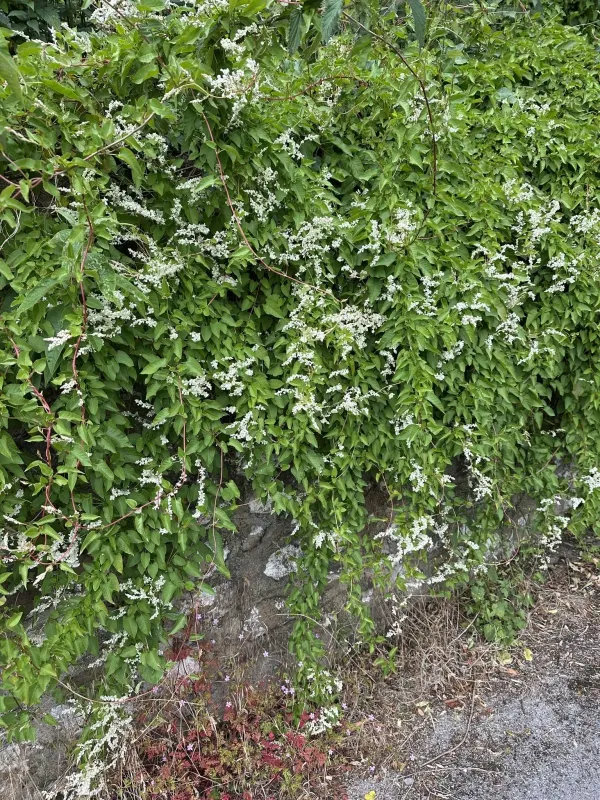
Belonging to the Polygonaceae family, Fallopia aubertii is native to China. It is highly valued in horticulture for its rapid growth, often extending its stems by more than a meter per growing season.
The plant thrives in a wide range of soil types but performs best in fertile, well-drained loamy soils. It has a moderate tolerance for soil pH, preferring neutral or slightly acidic conditions.
As a climbing vine, Fallopia aubertii strictly requires a robust and permanent support structure, such as a trellis or a sturdy fence, to accommodate its extensive biomass and wind resistance needs.
This species is well-adapted to temperate climates. It exhibits good sun tolerance, although it can also tolerate partial shade. Full sun exposure is recommended for achieving the most abundant flowering.
Routine maintenance includes regular watering during dry spells, especially during the first two years of establishment. Fertilization with a balanced slow-release fertilizer in early spring supports healthy canopy growth.
Main diseases and pests
Fallopia aubertii is generally resistant to most common plant diseases. However, in poorly ventilated environments with high humidity, it can be susceptible to powdery mildew outbreaks.
Aphids are the most common pests associated with this vine, often attacking the tender growth tips. Early detection and treatment with insecticidal soap or systematic insecticides can prevent large-scale infestations.
Spider mites can occasionally become an issue during hot, dry summer months. Monitoring the undersides of the leaves for webbing is essential for timely intervention with appropriate acaricides.
Sanitary pruning is the most effective cultural practice for disease prevention. Removing dead or diseased branches helps maintain airflow and reduces the habitat for potential fungal pathogens.
Avoiding excessive nitrogen fertilization is recommended, as it encourages overly rapid, succulent growth that is significantly more attractive to sap-sucking insects and less resilient to environmental stress.