
Plume poppy
Macleaya cordata (Willd.) R. Br.
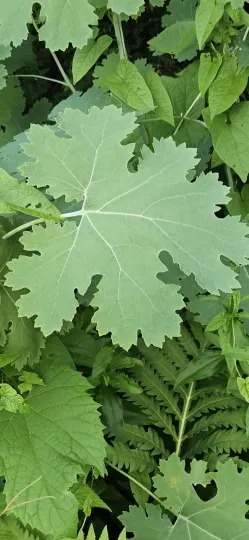
Description
Sowing dates
Macleaya cordata is propagated either by seeds or through the division of rhizomes. Seeds require a cold stratification period of several weeks to achieve optimal germination rates before spring sowing.
When starting from seeds, they should be sown in trays during early spring and kept in a warm environment until emergence, after which they are moved to cooler conditions.
Vegetative propagation via rhizome division is the preferred method for commercial plantations as it ensures genetic uniformity and faster establishment of the crop.
Divisions should be planted at a spacing of at least 60–80 centimeters apart to allow for the rapid expansion of the root system and to prevent overcrowding.
Early spring is the best time for planting rhizomes, as this allows the plants to establish a strong root network before the onset of the hottest summer temperatures.
Growing requirements
The Plume poppy belongs to the Papaveraceae family and is a vigorous, tall herbaceous perennial that can reach heights of up to 2.5 meters in favorable conditions.
This plant thrives in full sun but can tolerate light shade; however, full sun exposure is essential for maximizing the biosynthesis of its characteristic medicinal alkaloids.
Soil requirements include high fertility and excellent drainage, as the roots are sensitive to waterlogging. It prefers neutral to slightly alkaline soil types.
While mature plants demonstrate decent drought tolerance, consistent moisture during the early growth phase is critical for achieving maximum biomass production.
The plant is hardy and adapts well to various climatic conditions, provided that the soil is not prone to freezing-thaw cycles that can heave the rhizomes in winter.
Yield
The yield of the Plume poppy is measured by the dry mass of the aerial parts (stems and leaves), which serve as the raw material for pharmaceutical extraction.
Under intensive management, a mature plantation can produce significant annual yields, typically peaking by the third year of cultivation when the stand is fully established.
To maintain high yield levels, the crop requires annual weeding and potential split applications of nitrogenous fertilizers to support the rapid vegetative growth.
The concentration of secondary metabolites, specifically sanguinarine, is the main quality indicator for the industry, making the timing of harvest absolutely vital for economic output.
Productivity remains stable for several years, after which the field may require rejuvenation through splitting the rhizomes or full replanting of the area.
Main diseases and pests
Due to the presence of potent alkaloids, the Plume poppy is largely resistant to many common pests, acting as a natural repellent to some herbivores.
Fungal issues, such as powdery mildew, may occur in poorly ventilated or excessively dense stands, necessitating better spacing or preventive fungicidal treatments.
Aphid infestations can occur during periods of environmental stress, specifically during prolonged dry weather when the plant's natural defenses may be temporarily weakened.
Root rot is the most significant threat to the crop, typically caused by heavy soils or inadequate drainage systems that trap moisture around the rhizomes.
Key concerns include:
- Powdery mildew in stagnant air
- Aphids on succulent new growth
- Rhizome rot from excessive soil moisture
- Stem breakage due to high wind exposure
Harvesting
The harvest must occur during the full flowering stage to capture the peak concentration of active alkaloids, which are most abundant in the plant tissues at this time.
Harvesting involves cutting the stems 10–15 centimeters above ground level, which allows the plant to recover and protects the perennial rhizome base.
Immediately after cutting, the biomass must be processed or dried to prevent fermentation, which can rapidly decrease the quality of the pharmacological compounds.
Drying is typically performed in forced-air dryers at temperatures not exceeding 50 degrees Celsius to ensure the stability of heat-sensitive active ingredients.
Proper storage of the final dried product requires cool, dry conditions to prevent moisture re-absorption and degradation of the extracted alkaloids over time.