
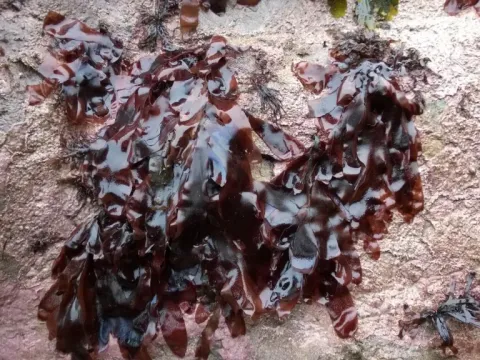
Palmaria
Palmaria
Palmaria (Palmaria palmata), commonly known as dulse, is a valuable red macroalgae cultivated in marine environments. The cultivation cycle typically begins with the seeding of collectors or specialized nets during the late autumn months when water temperatures decrease, favoring spore settlement.
What the section contains

Palmaria
Modern mariculture techniques often utilize vegetative propagation, where fragments of healthy thalli are attached to growth substrates. This method ensures faster biomass accumulation compared to relying on natural spore recruitment, allowing farmers to optimize their harvest schedules efficiently.
Selection of the growing site is crucial, as the algae require stable currents to deliver nutrients and prevent the buildup of metabolic waste. Choosing an area with appropriate water depth ensures the plants receive sufficient light while remaining protected from extreme wave action.
Successful planting involves maintaining an optimal density on the substrates to prevent competition for light and nutrients. Overcrowding can lead to slower growth rates and reduced overall yield, so regular monitoring during the initial development phase is highly recommended.
Integrating Palmaria into multi-trophic aquaculture systems allows the seaweed to utilize nitrogen and phosphorus released by other farmed species like shellfish. This synergistic approach promotes faster growth and enhances the sustainability of the entire farming operation.
Palmaria belongs to the Palmariaceae family and is native to the cold and temperate waters of the North Atlantic and Pacific Oceans. It thrives in environments with temperatures ranging from +5°C to +15°C, making it highly sensitive to warming trends.
Salinity requirements for optimal growth typically fall within the 25–35 ppt range. Significant fluctuations in salinity, especially freshwater runoff from heavy rain, can stress the crop and lead to tissue degradation or detachment from the substrates.
Water quality and transparency are essential for photosynthesis, as turbidity blocks the light needed for biomass production. Clear, nutrient-rich water is the hallmark of a high-yielding site, requiring regular water quality testing to monitor levels of essential nutrients.
The species requires stable water movement to maintain gas exchange and nutrient uptake. Stagnant water conditions are detrimental, as they encourage the growth of opportunistic epiphytes and increase the risk of disease outbreaks within the seaweed canopy.
Light exposure must be balanced, as excessive intensity can cause bleaching of the pigments in the thallus. Optimal sites are usually located in the sub-littoral zone where the algae receive consistent light levels throughout the growing season.
Yields of Palmaria in commercial operations depend heavily on the efficiency of the substrate design and site-specific environmental conditions. High-performing farms can achieve yields between 5 to 10 kilograms per linear meter of growth rope per season.
Careful management of the harvest schedule allows for multiple partial harvests, where only a portion of the biomass is removed, allowing the remaining tissue to continue growing and regenerating for a second harvest cycle.
Advancements in genetic selection focus on developing strains with higher biomass density and resilience to changing ocean temperatures. Such improvements are vital for increasing the profitability of large-scale seaweed farms in the long term.
The efficiency of the dry matter yield is a key performance indicator. Post-harvest processing must be precise to maintain the seaweed's nutritional profile, including its high concentration of proteins, vitamins, and essential minerals.
Predicting crop yield involves tracking seasonal growth rates, which tend to peak in the spring. Understanding these patterns enables producers to optimize labor and equipment resources, ensuring the harvest is completed at the point of maximum quality.
The primary threats to Palmaria crops include bacterial and fungal pathogens that manifest as spots or tissue softening. These issues are often exacerbated by poor water circulation and high water temperatures, particularly in late summer.
Small crustaceans and grazers, such as amphipods, can cause significant physical damage to the thalli. Such lesions not only reduce market value but also act as entry points for secondary infections, necessitating integrated pest management strategies.
Epiphytic growth is a constant challenge, as mosses and other unwanted algae compete with the crop for light and space. Regular maintenance and cleaning of the lines are required to keep the Palmaria stand clean and healthy.
Environmental pollutants, including heavy metals, pose a significant risk, as seaweed is highly efficient at bioaccumulation. Strict site selection based on water quality assessments is mandatory to ensure the final product meets food safety regulations.
To mitigate disease risks, farmers prioritize crop rotation and the maintenance of diverse ecosystems around the farm. Keeping the plant density moderate also helps by ensuring improved water flow around every individual thallus.
Harvesting is performed either manually or via mechanized systems, depending on the scale and configuration of the farm. Speed is essential to minimize the time between removal from the ocean and the initial processing steps.
Post-harvest stabilization involves rapid cooling or immediate drying in climate-controlled facilities. Maintaining temperatures below +40°C during drying is critical to preserving the flavor profile and nutritional content of the seaweed.
The final product is widely used in the food industry as a snack, a functional ingredient in health foods, or a vegan seasoning. Its unique, savory flavor, often compared to bacon, makes it a premium product in international markets.
Packaging for the consumer market requires airtight materials to protect the dried seaweed from humidity and light exposure. This shelf-stable form allows the product to be stored for over a year without losing its color or nutritional properties.
Strategic planning of the supply chain ensures that fresh or processed Palmaria reaches consumers consistently. Proper storage conditions in dark, cool locations are essential for maintaining quality until the product reaches the final retail destination.