
Pycnanthus kombo
Pycnanthus kombo
Description
Growing requirements
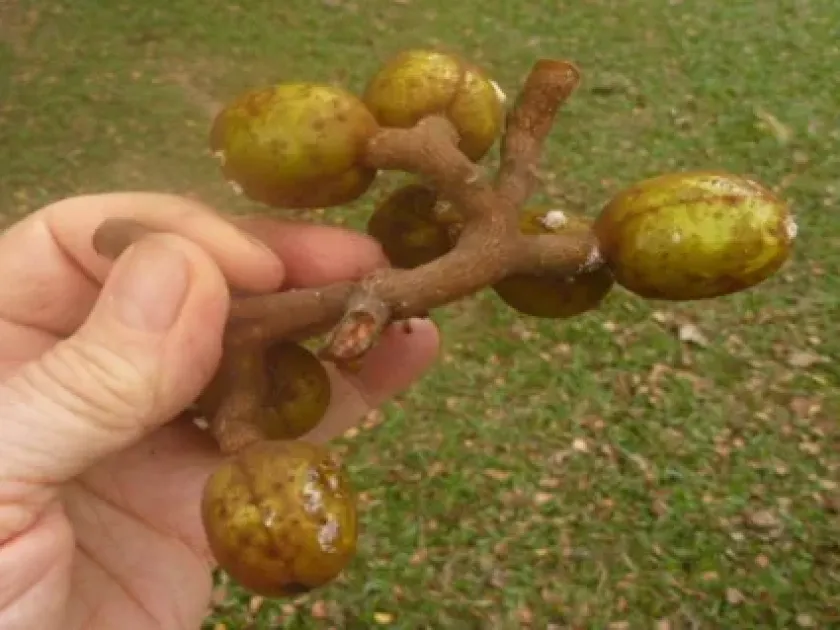
Pycnanthus kombo, commonly known as the African nutmeg, is a large tree belonging to the Myristicaceae family. It is recognized for its significant height, often reaching up to 40 meters, and its dense, evergreen canopy that provides crucial shade in tropical environments.
Native to the tropical regions of West and Central Africa, this species thrives in rainforest ecosystems. It is highly adapted to equatorial climates characterized by high temperatures and consistent rainfall throughout the year.
The cultivation of this species requires deep, fertile, and well-drained soils. Ensuring proper soil structure is essential, as the tree is susceptible to root distress if planted in waterlogged conditions that do not allow for adequate oxygen circulation.
Agricultural management relies on rapid sowing techniques. Seeds lose viability quickly, so they must be planted in nurseries immediately after harvesting. Young plants require partial shade and consistent moisture to transition successfully to the field.
As a key component of its native habitat, Pycnanthus kombo plays a vital role in forest ecology by stabilizing soil and serving as a food source for numerous bird and mammal species that disperse its seeds across the rainforest floor.
Main diseases and pests
The main threats to Pycnanthus kombo include a variety of fungal pathogens that proliferate in high-humidity environments. These infections can affect both the foliage and the fruit, leading to reduced yield and stunted development.
Insect pests, particularly wood-boring beetles, pose a major threat to mature trees. By tunneling through the bark and sapwood, these insects can structurally weaken the tree, making it vulnerable to wind damage and secondary infections.
Defoliating insects can be catastrophic for seedling development in nursery environments. Frequent monitoring is necessary to prevent significant biomass loss during the critical early stages of the tree's lifecycle.
Habitat loss due to land conversion remains the most significant long-term risk. Without protected areas and sustainable management practices, the genetic diversity of the species faces pressure from agricultural expansion and uncontrolled logging.
Effective management strategies emphasize sanitary logging practices and the maintenance of diverse forest structures. Protecting the natural predators of insect pests is also a critical component of integrated pest management in these regions.
Harvesting
The primary economic output of the tree is the oil extracted from its seeds, widely referred to as kombo butter. This product is highly valued in pharmaceutical and cosmetic industries for its unique chemical properties and bioactive compounds.
The timber harvested from Pycnanthus kombo is also of commercial interest. Because it is relatively soft and easy to manipulate, it is frequently used in the furniture industry, for interior construction, and in the production of plywood.
Harvesting is typically performed by hand, focusing on gathering mature fruits before they decay on the forest floor. Timely processing is necessary to maintain the quality of the lipids and ensure the butter is free from fungal contamination.
Processing involves drying the seeds followed by cold pressing. This mechanical extraction method preserves the integrity of the oil, ensuring that the final product meets the standards required for medicinal and industrial applications.
Sustainable harvesting programs are essential to ensure the longevity of these trees. Integrating Pycnanthus kombo into agroforestry systems allows for economic benefits while mitigating the pressures of deforestation in African tropical zones.