
Myristica dactyloides
Myristica dactyloides
Description
Growing requirements
Myristica dactyloides is an evergreen tree belonging to the Myristicaceae family, naturally occurring in the humid tropical forests of Sri Lanka and Southern India.
The crop requires consistently high temperatures and high relative humidity, which are characteristic of tropical lowland and mid-mountain regions.
It prefers deep, fertile, well-drained loamy soils rich in organic matter, maintaining a neutral to slightly acidic pH level for optimal development.
The trees require protection from strong, direct winds which can damage the canopy and significantly reduce overall fruit yield.
In agronomic practice, it is primarily cultivated within multi-strata agroforestry systems that provide natural shading during the early stages of growth.
Yield
The yield of Myristica dactyloides is directly correlated with tree age, light exposure, and the standard of maintenance provided in plantation settings.
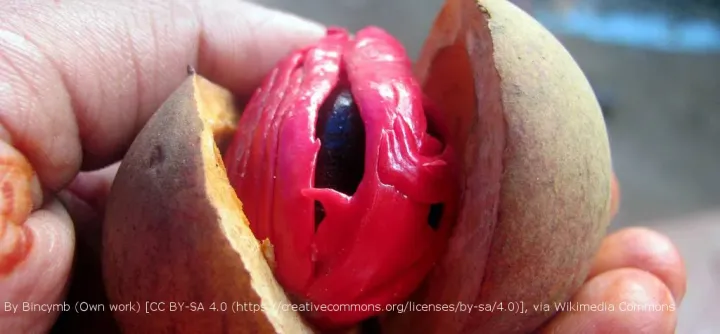
The fruits are drupes containing a seed covered in a red aril, which holds significant commercial value as a highly sought-after spice.
Once maturity is reached, the fruits split open naturally, signaling the optimal time for harvesting the seeds and their valuable coverings.
The economic value of this crop lies in the production of mace and nutmeg, which are utilized in both the culinary and essential oil industries.
Consistent product quality is maintained through regular application of organic fertilizers and meticulous weeding around the base of each tree.
Main diseases and pests
The primary threats to these plantations are fungal infections that target the root system, especially when soil drainage is insufficient.
In conditions of extreme humidity, leaf spot and anthracnose may occur, necessitating regular phytosanitary monitoring of the entire plantation.
Among pests, wood-boring insects represent the most significant risk, as they can weaken the trunk and diminish the tree's long-term health.
For effective disease management, it is recommended to use biological control agents and ensure proper spacing between trees to allow for adequate airflow.
- Conduct regular sanitary pruning of infected branches
- Monitor soil moisture levels closely
- Scout for pests throughout the growing season
- Apply fungicides upon the first sign of pathogen spread
Harvesting
Harvesting is labor-intensive as fruits ripen at different intervals, requiring multiple collection sessions over several weeks.
Once gathered, the fruits are depulped, and the bright red aril is carefully detached from the surface of the nutmeg seed.
The aril requires delicate shade-drying to preserve its aromatic properties and prevent the degradation of volatile essential oils.
The seeds, known as nutmegs, undergo a more prolonged drying process until the kernel rattles freely within the hardened shell.
Following the completion of the drying process, the produce is graded by size and quality for distribution in global spice markets.