
Mitrastemon
Mitrastemon
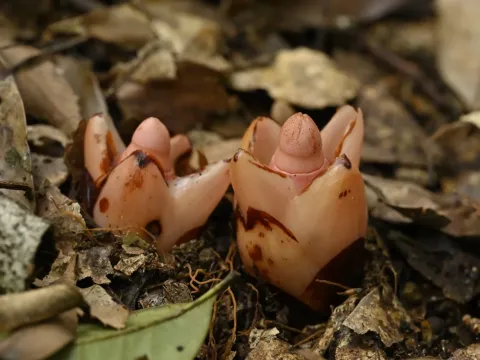
Mitrastemon is a genus of highly specialized holoparasitic plants belonging to the Mitrastemonaceae family. These plants are unique because they lack chlorophyll and survive exclusively by parasitizing the root systems of trees, particularly those within the Fagaceae family.
What the section contains


Mitrastemon
The distribution of Mitrastemon includes tropical and subtropical regions across Southeast Asia, Japan, and parts of Central America. Because of their extreme dependency on a host, these plants cannot be cultivated as conventional agricultural crops and are only found in undisturbed forest environments.
Botanically, the plant is mostly hidden, existing as a mass of filaments within the host's roots. It only becomes visible above ground when it produces fleshy, distinctively shaped flowers. This biological strategy is an adaptation to ensure successful pollination in the shaded, damp environment of a forest floor.
The environmental requirements for Mitrastemon are strict, focusing on high relative humidity and a stable, temperate microclimate. As a result, the plant is extremely sensitive to changes in its surrounding habitat, making it a bioindicator of healthy, old-growth forest ecosystems.
From a хозяйственное usage perspective, Mitrastemon has no industrial application. However, it remains a subject of intense scientific interest due to its evolutionary history and the specialized genetic mechanisms that allow it to bypass host immune responses during parasitization.
The primary threat to the survival of Mitrastemon is habitat loss. The clearing of tropical forests for agriculture or timber severely reduces the population of host trees, leading to the rapid decline of these parasitic plants in affected areas.
Pathogenic organisms that attack the roots of host trees pose a significant risk to the plant. Because Mitrastemon relies on the nutritional flow of the host's roots, any disease that compromises the host tree's root health or causes mortality in the tree inevitably leads to the death of the parasite.