
Mitrastemon yamamotoi
Mitrastemon yamamotoi
Description
Growing requirements
Mitrastemon yamamotoi is a rare and specialized parasitic plant belonging to the Mitrastemonaceae family. It is an obligate root parasite, meaning it lacks chlorophyll and cannot perform photosynthesis, obtaining all essential nutrients from host plants.
The plant is native to the subtropical regions of East Asia, including Japan and Taiwan. Its distribution is strictly tied to the presence of host trees, particularly species within the Fagaceae family, such as those in the genus Castanopsis.
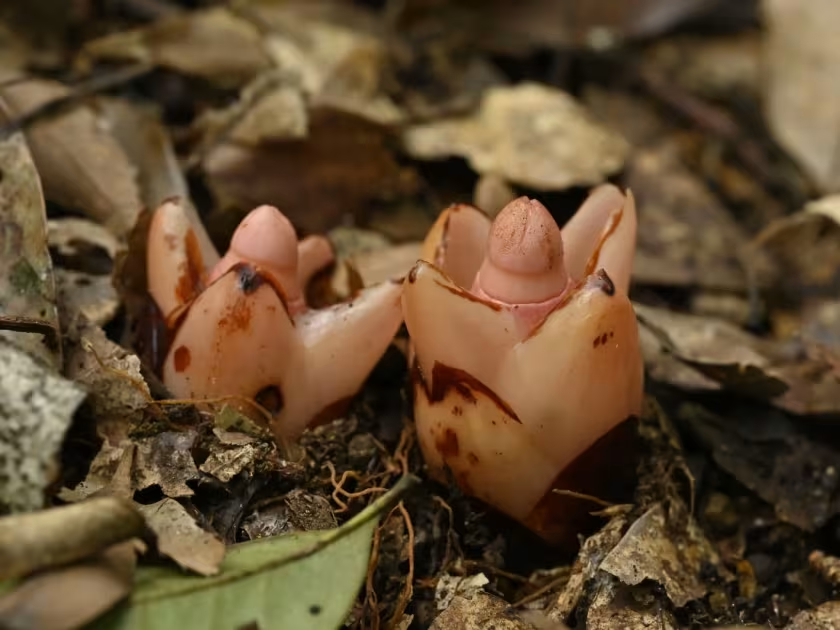
Botanically, the plant is remarkably reduced, appearing mostly as a fleshy, short-lived flowering structure that emerges from the roots of its host. The vegetative body is embedded within the host root system, which serves as a physiological bridge for nutrient absorption.
Growth requirements for this species are highly demanding, involving specific humidity levels and the presence of established forest ecosystems. It cannot be cultivated as a traditional crop due to its absolute dependency on the host tree's living tissues.
From an agricultural and botanical perspective, this species is not a crop for harvest but an object of ecological research. Conservation of its natural habitat is crucial, as the survival of the plant is intrinsically linked to the health of the host trees and the surrounding forest environment.