
Mitrastemon matudae
Mitrastemon matudae
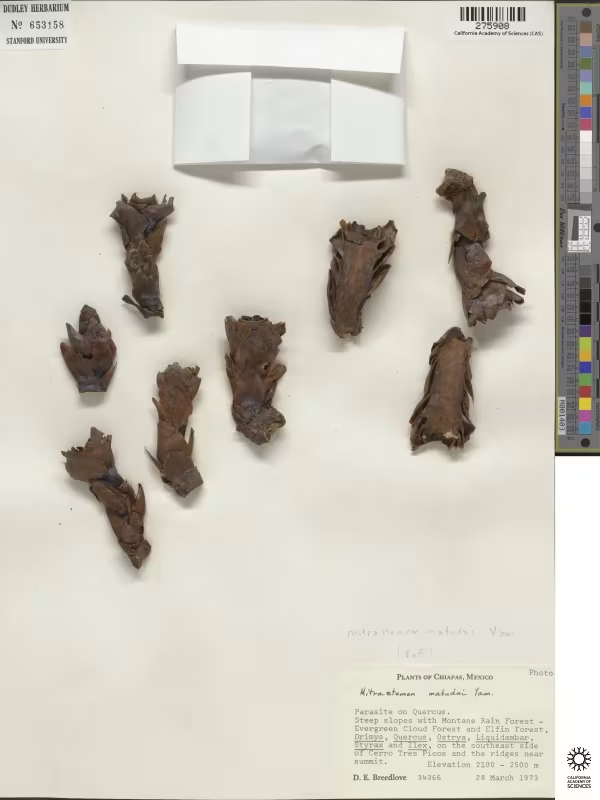
Description
Growing requirements
Mitrastemon matudae is a rare species of holoparasitic plant belonging to the Mitrastemonaceae family. It lacks chlorophyll and cannot perform photosynthesis, obtaining all required nutrients and water directly from the root system of its specific host tree.
The native distribution is restricted to the cloud forests of Mexico and parts of Central America. This plant predominantly parasitizes the roots of oak trees (Quercus species), showing high host specificity that limits its geographic occurrence.
The morphology is unique: the vegetative body exists as endophyte filaments within the host's root tissue, while the reproductive structures emerge as fleshy, mushroom-like flowers above the soil surface during the blooming period.
Environmental requirements include a stable, humid climate characteristic of high-altitude tropical cloud forests. The plant thrives only in undisturbed ecosystems where its host trees are abundant and mycorrhizal associations are intact.
Commercial cultivation of Mitrastemon matudae is not feasible due to its complex parasitic life cycle and absolute reliance on the host tree's physiological health, making it an object of study rather than an agricultural crop.
Main diseases and pests
The primary threat to Mitrastemon matudae is habitat loss. The destruction of cloud forests for agricultural expansion or timber extraction directly leads to the elimination of both the host trees and the parasite.
Climate change poses a significant risk, as alterations in rainfall patterns and humidity levels interfere with the specific conditions required for the parasite to bloom and complete its life cycle.
Pollution and the use of agrochemicals in nearby fields can impact the sensitive root zone of host trees, indirectly causing the decline of the parasitic colonies attached to them.
Disease outbreaks in host tree populations represent an immediate danger, as the parasite's survival is linked to the nutrient circulation within the host's vascular system.
Given its specialized nature and localized range, the species is considered highly vulnerable, with conservation efforts focusing on protecting the integrity of its native forest environment.