
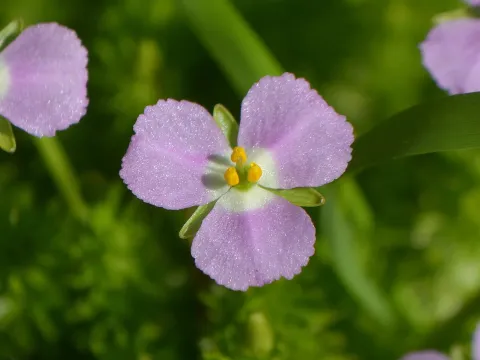
Mayaca
Mayaca
Mayaca is a genus of aquatic or marsh-dwelling flowering plants belonging to the family Mayacaceae. These plants are characterized by their delicate, moss-like appearance, featuring numerous narrow leaves spirally arranged along elongated, branching stems.
What the section contains


Mayaca
The genus originates from the tropical and subtropical regions of the Americas, ranging from the southeastern United States through the Caribbean to Argentina. They are typically found in soft, acidic waters, such as swamps, slow-moving rivers, and shallow marshes.
Cultivating Mayaca requires high-intensity lighting to maintain its vibrant green or reddish coloration. Without adequate light, the stems tend to grow lanky and shed their lower leaves, which significantly diminishes the ornamental value of the plant.
Successful growth relies heavily on a nutrient-rich substrate and the supplementation of CO2. Furthermore, these plants thrive best in soft, slightly acidic water, which mimics their natural environmental conditions and promotes vigorous development of the apical shoots.
As a decorative plant, it is widely utilized in aquascaping to create lush, dense textures. It serves as an excellent foreground or midground element, providing a naturalistic look that complements other aquatic flora in freshwater tanks.
The primary threat to Mayaca is the presence of aggressive algae. Because its foliage is extremely thin and delicate, it is highly susceptible to becoming smothered by thread algae or biofilm if nutrient levels in the tank are imbalanced.
Iron and micronutrient deficiencies represent a common physiological issue. When the plant lacks essential minerals, the new shoots often show signs of chlorosis, becoming pale or turning yellow before they fully mature.
Root system disturbance is another major concern. If the substrate is compacted or if the plant is frequently moved, the delicate roots can fail to establish, leading to the decay of the lower stem and the eventual collapse of the plant.
Temperature fluctuations outside the optimal range can induce rapid stress. Sustained high temperatures often result in "melting," where the plant tissues disintegrate and lose structural integrity within a few days.
Invertebrate pests, particularly certain snail species or crustacean populations, may browse on the tender leaves of the Mayaca. This herbivory can result in significant foliage loss and increased vulnerability to subsequent fungal or bacterial infections.