
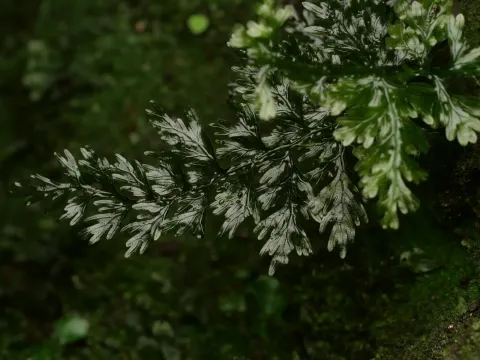
Vandenboschia
Vandenboschia
Vandenboschia is a genus of ferns belonging to the Hymenophyllaceae family, often referred to as "filmy ferns" due to their delicate, translucent leaf structure.
What the section contains


Vandenboschia
These plants are primarily adapted to humid, low-light environments such as dense forests, rock crevices near waterfalls, or humid ravines in tropical and subtropical regions.
In cultivation, providing consistent humidity is the primary requirement for survival. These plants thrive best in enclosed containers, such as terrariums or Wardian cases, where air moisture levels remain high.
The substrate must be acidic, well-draining, and rich in organic matter, such as peat or sphagnum moss, which helps to maintain the necessary moisture levels for the rhizomes.
Light intensity should be kept very low. Exposure to direct sunlight will quickly damage the thin, single-celled leaf layers, leading to rapid dehydration and tissue necrosis.
The most significant threat to Vandenboschia is the development of fungal pathogens, particularly in stagnant air conditions with excessive surface moisture on the foliage.
Root rot is a major risk if the potting medium lacks proper drainage, leading to the suffocation of the delicate rhizome system.
Pests such as mites and mealybugs can pose a threat, though their management is complicated by the extreme sensitivity of the leaves to conventional chemical pesticides.
Physiological decline often occurs when air humidity drops below critical thresholds, causing the fronds to crisp and die back within a very short period.
Regular monitoring for signs of rot is essential. Proper sanitation of tools and substrate components is required to prevent the introduction of opportunistic diseases into the collection.