
Killarney fern
Vandenboschia radicans
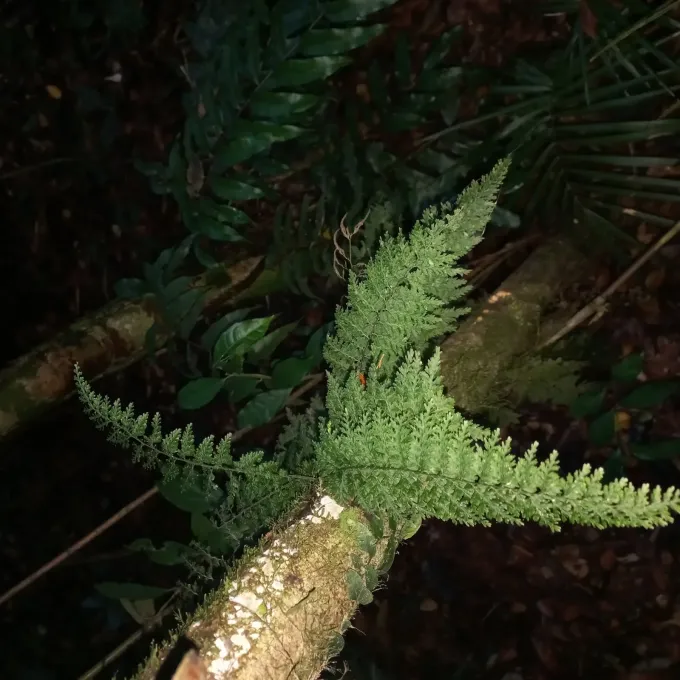
Description
Growing requirements
Vandenboschia radicans, commonly known as the Killarney fern, is a rare and distinct species belonging to the Hymenophyllaceae family. It is a filmy fern, characterized by its translucent fronds which consist of only a single layer of cells, making it a highly specialized plant in the botanical world.
The plant originates from humid, sheltered environments including temperate rainforests and rocky ravines. Its natural range encompasses parts of Ireland, the Atlantic islands, and several locations in southern Europe and North America, where it thrives in constant high humidity.
Cultivation requirements for this fern are rigorous. It demands a strictly controlled environment, typically an enclosed terrarium or a specialized greenhouse, where humidity levels can be maintained near saturation point, often exceeding 90% at all times.
The choice of substrate is vital for the Killarney fern. It requires a loose, highly acidic medium that mimics the rocky crevices or moss-covered surfaces of its natural habitat. A mixture of peat, living sphagnum moss, and charcoal is widely considered the most effective growing medium.
Temperature management is another key aspect of its agro-technique. It prefers a cool to moderate environment, strictly avoiding frost while also preventing heat stress. Temperatures above 22-24 degrees Celsius are generally detrimental to the plant's health and lead to rapid dehydration.
Main diseases and pests
The primary threats to the Killarney fern in cultivation are fungal diseases. These are often triggered by stagnant air and waterlogging. Regular, gentle air movement within the enclosure is necessary to prevent the development of mold on the fragile frond surfaces.
Pests such as spider mites and mealybugs can colonize the plant. Due to the delicate nature of the foliage, traditional chemical treatments are often too harsh and can destroy the plant; therefore, biological control or manual removal is the preferred method.
Water quality is a critical factor for the longevity of the plant. The roots and fronds are extremely sensitive to chemicals such as chlorine and accumulated mineral salts found in tap water, which can cause severe physiological stress and necrotic spotting.
Inadequate light exposure is a significant risk factor. While the plant is shade-tolerant, it requires consistent, very low-intensity light to perform photosynthesis. Exposure to direct sun will cause immediate and irreversible tissue damage due to the lack of a cuticle on the fronds.
Genetic vulnerability and slow reproduction rates make this species difficult to manage in large numbers. Any disruption in the delicate balance of its micro-environment can lead to a decline that is difficult to reverse, requiring constant monitoring by the grower.