
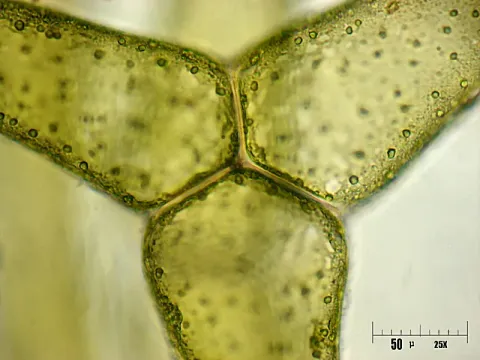
Hydrodictyon
Hydrodictyon
Hydrodictyon is not a traditional sown crop; its cultivation begins by inoculating prepared water reservoirs with starter cultures. Spring and summer months are the most favorable for rapid vegetative growth.
What the section contains

Hydrodictyon
Fragments of the thallus are introduced into ponds with high concentrations of nutrients. The optimal temperature range for active cell division is between 18 and 25 degrees Celsius.
Propagation occurs both vegetatively through the fragmentation of the net-like structure and sexually under stress conditions. The initial stocking density must allow for sufficient light penetration to all parts of the colony.
Continuous water movement or periodic stirring stimulates the formation of its characteristic net-like thallus structure. Stagnant zones slow growth and can induce biomass decay.
Population density must be strictly monitored to prevent overcrowding, which can lead to nocturnal oxygen depletion and potential crop loss.
Hydrodictyon, commonly known as water net, belongs to the Hydrodictyaceae family. It is a freshwater green alga consisting of multinucleate cells linked into distinct pentagonal or hexagonal loops.
The crop requires high levels of nitrates and phosphates, making it a viable candidate for wastewater remediation. Light availability is a limiting factor for biomass accumulation.
Water conditions should remain neutral or slightly alkaline. Hydrodictyon is highly sensitive to chemical pollutants, including herbicides and heavy metals, which suppress its metabolic functions.
Agricultural management requires regular water chemistry analysis. High salinity levels may trigger a shift in plankton composition and result in the displacement of the crop by more aggressive species.
Reservoir infrastructure must protect the algae from strong turbulent flows that can mechanically disrupt the fragile colonial structures.
Yield is measured by the volume of raw biomass harvested per unit of water surface area. Under ideal conditions, the algae can double its biomass within a few days.
Productivity is directly dependent on temperature and the availability of mineral nutrients. Intensive cultivation during summer months can yield significant amounts of organic material.
The primary use of the crop is as a high-protein feed additive for livestock. Its biomass is rich in vitamins and essential minerals, enhancing the nutritional profile of animal rations.
Hydrodictyon also serves as an effective biofilter for treating livestock wastewater, where it extracts nitrogen and phosphorus while producing valuable organic material.
Recent research highlights the potential of using harvested Hydrodictyon biomass for biogas production through anaerobic digestion.
Pathogenic fungi and predatory protozoa represent the primary biological threats, as they can damage cellular walls and cause tissue necrosis. Affected areas often turn gray or brown.
Competition from other algae species, such as Spirogyra, frequently impacts purity. Massive cyanobacteria blooms can produce toxins that prove fatal to the Hydrodictyon crop.
Certain small crustaceans and aquatic insects act as pests by consuming the thallus. Sudden temperature shifts or cold snaps can cause mass disintegration of the colonies.
Overcrowding leads to the accumulation of metabolic waste, resulting in autotoxicity. Regular sampling is essential to detect early signs of stress.
Prevention strategies include filtering inflow water and maintaining strict sanitary conditions within reservoirs to mitigate disease outbreaks.
Harvesting is performed mechanically using nets or specialized conveyor systems designed to collect floating biomass. Efficiency depends on the structural integrity of the colonies.
The optimal harvest time occurs when colonies reach their peak size before degradation begins. Delayed harvesting reduces raw material quality due to senescence and rotting.
Extracted biomass must be dewatered. Centrifugation or mechanical pressing are common methods used to reach the target moisture content for storage.
Drying should be conducted at moderate temperatures. Overheating must be avoided to prevent the degradation of heat-sensitive vitamins and nutrients.
The final product should be stored in a dry, well-ventilated facility to prevent mold growth and maintain its nutritional feed value.