
Water net
Hydrodictyon reticulatum
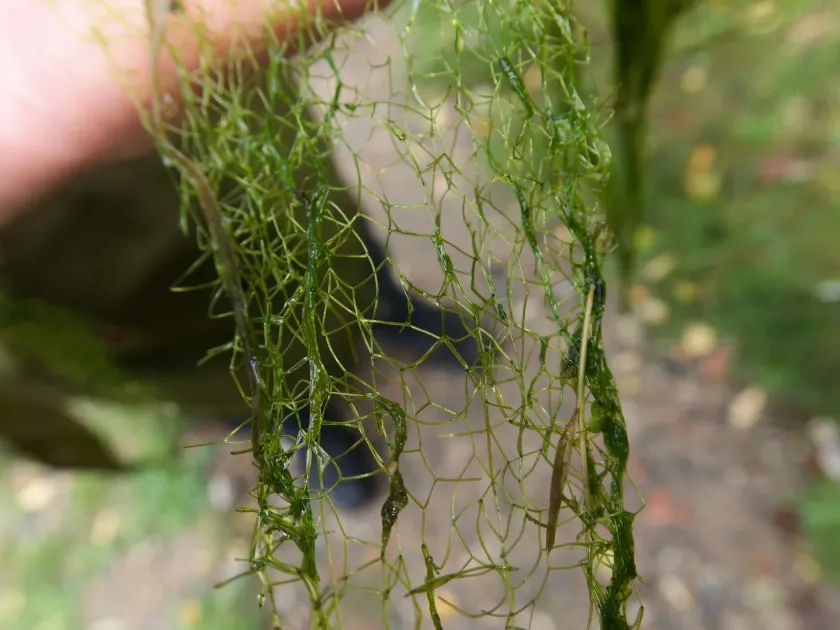
Description
Sowing dates
Hydrodictyon reticulatum is not sown in the traditional sense as it is a macroscopic freshwater alga. Propagation occurs primarily through vegetative fragmentation of its net-like thallus or via the formation of motile zoospores within the aquatic environment.
Active growth typically begins when water temperatures rise above 12–15 degrees Celsius. In controlled aquaculture, an inoculum is introduced directly into the water column, provided there is sufficient light penetration to support photosynthesis.
The optimal time for rapid colonization is during the spring and summer months when daylight hours are maximized. In closed pond systems, maintaining an initial biomass density is crucial to ensure fast coverage of the water surface.
The reproductive process is intensified by a consistent supply of nutrients. Under unfavorable conditions, the alga may transition to a dormant state by forming zygotes that settle at the bottom until more favorable conditions return.
Providing an appropriate substrate or creating conditions for free-floating nets significantly improves the efficiency of the initial growth phase. It is essential to monitor population density from the start to avoid resource depletion.
##requirements##To thrive, Hydrodictyon requires standing or slow-moving water bodies rich in nitrogen and phosphorus compounds. It is a typical species of eutrophic waters, capable of rapidly accumulating biomass in high-nutrient environments.
Temperature plays a decisive role: optimal development occurs within the 18 to 25 degrees Celsius range. Excessive heating can lead to thallus degradation, making partial shading a useful practice in hot weather conditions.
Light availability is a critical factor, as Hydrodictyon is a photoautotrophic organism. Direct sunlight stimulates cell division, but in shallow ponds, one must manage solar radiation to prevent local water overheating.
The chemical composition of the water must include essential micronutrients required for photosynthesis. Although the alga is an indicator of high trophic status, it is highly sensitive to chemical pollution, such as heavy metals or pesticides.
Professional management requires maintaining a pH balance between 7.0 and 8.5 and ensuring adequate water circulation. Stagnation can lead to localized nutrient depletion and the death of individual segments of the net-like thallus.
##yield##The yield of this culture is characterized by an extremely high rate of biomass accumulation in stable conditions. Due to its unique mesh structure, the alga can cover vast areas of water in a short time, forming a dense carpet of biomass.
In algae farms, yield can be measured in kilograms of dry mass per square meter per month. Efficiency depends on the harvesting method, typically utilizing specialized nets or automated filtration conveyor systems.
The rate of reproduction is directly correlated with nitrate concentrations in the water. Regular harvesting promotes population rejuvenation, as excessive density slows growth and leads to premature senescence of the thallus.
The dry mass consists largely of high-quality protein, making the crop promising for livestock feed supplements. Harvesting requires specialized equipment to separate the algae from the water without causing mechanical damage to the delicate mesh.
Yield potential can only be realized through continuous monitoring of water nutrient levels. Any deficit in essential macronutrients results in a sharp decline in the growth dynamics of the vegetative mass.
##threats##The primary threats include algivores, such as specific fish species, crustaceans, and zooplankton, which can destroy significant portions of the crop in a short timeframe.
Viral and fungal infections often strike when stocking density is too high. This manifests as yellowing of the nets, loss of structural integrity, and rapid disintegration of the thallus.
Competition with other aquatic plants or blue-green algae often results in the suppression of Hydrodictyon. More aggressive species can block sunlight, which is fatal for this photoautotrophic crop.
Chemical contamination from agricultural runoff, particularly herbicides, is extremely dangerous. Even trace amounts of pesticides can cause mass mortality of the plantation within a very short period.
Improper aeration or sudden fluctuations in water level can damage the physical structure of the net. The alga requires environmental stability to maintain its specific morphological integrity.
##harvest##Harvesting is performed mechanically using nets or automated filtration conveyor systems. The algae are carefully extracted from the water, minimizing contact with bottom sediments to maintain the purity of the raw material.
Primary processing involves removing excess moisture and rinsing out impurities. Centrifuges are often used because the mesh structure retains a large volume of water, which complicates subsequent storage.
After harvesting, the material is sent for drying, which should occur at moderate temperatures to preserve the nutritional value of the protein, as excessive heat can cause denaturation.
For long-term storage, flash freezing or vacuum packing is utilized. This ensures the stability of bioactive compounds necessary for applications in animal feed production.
An essential step is sorting the harvest to remove necrotic fragments and extraneous organisms. High-quality cleaning of the raw material guarantees commercial demand from processing enterprises.