
Cordyla madagascariensis
Cordyla madagascariensis R. Vig.
Description
Growing requirements
Cordyla madagascariensis is a notable plant belonging to the Fabaceae family. Native to the island of Madagascar, this tree species is specifically adapted to the dry deciduous forests and savannahs found across the region.
The tree thrives in well-drained soil types, typically favoring sandy or loamy substrates that allow for deep root penetration. It is recognized for its high tolerance to prolonged dry seasons, which is a physiological adaptation to its native habitat.
Optimal growth conditions require full sun exposure and a tropical climate with a distinct wet and dry cycle. The tree does not tolerate cold temperatures or waterlogged soil, which restricts its cultivation range to specific tropical zones.
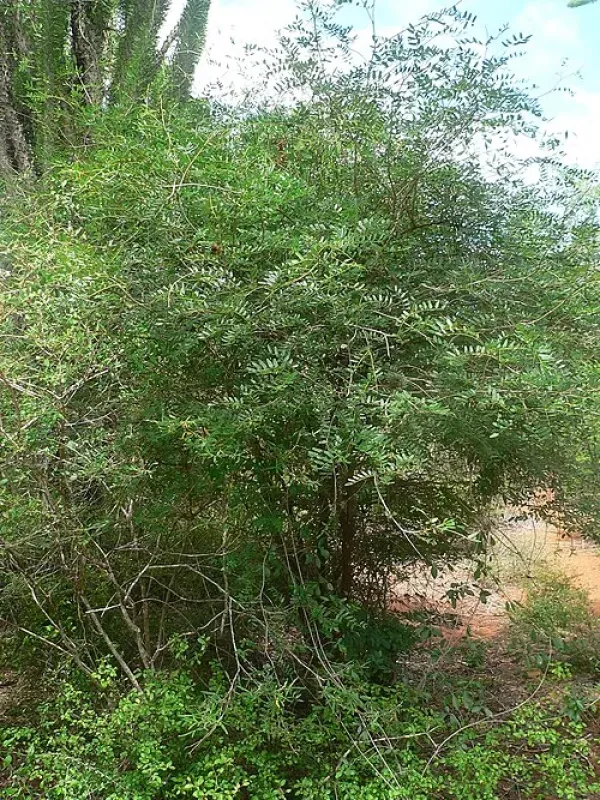
Botany-wise, the species is characterized by its robust trunk and complex pinnate leaves, typical of the legume family. It possesses a resilient structure that allows it to maintain structural integrity in areas subjected to seasonal environmental stress.
Economically, the tree is primarily utilized for its durable timber, which is highly valued for its strength. Furthermore, it serves an important ecological role in soil stabilization, helping to prevent erosion in vulnerable tropical landscapes.
Main diseases and pests
Major threats to the species include habitat degradation and deforestation, which directly impact the natural regeneration cycle. The encroachment of agricultural land into forest areas significantly reduces the population of this tree.
Pests such as various wood-boring beetles and leaf-feeding insects pose a threat to individual health in dense forest environments. Fungal pathogens are generally manageable as long as the soil drainage remains adequate to prevent root diseases.