
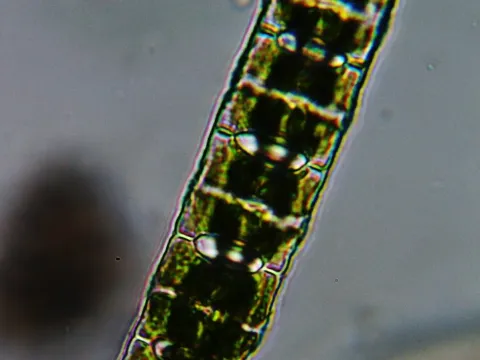
Desmidium
Desmidium
Desmidium is a genus of filamentous green algae belonging to the family Desmidiaceae. It is a strictly aquatic organism found in freshwater habitats rather than a cultivated agricultural crop in the traditional sense.
What the section contains

Desmidium
The genus thrives in oligotrophic, slightly acidic waters such as bogs, fens, and pristine ponds. These environments provide the specific mineral balance and low organic content that are essential for their survival.
Botanically, Desmidium is characterized by its distinct colonial structure, where cylindrical cells form long chains held together by mucilage. Each cell contains specialized chloroplasts designed for efficient light absorption.
These algae are distributed globally across diverse climatic zones, often serving as a primary food source within the aquatic food web. They play a vital role in oxygen production through photosynthesis in freshwater environments.
Requirements for growth include consistent light penetration, clear water, and a stable pH ranging between 5.5 and 7.0. Fluctuations in water chemistry, especially increases in alkalinity, typically inhibit their development.
The primary threat to Desmidium is water eutrophication resulting from agricultural run-off. Excess nitrates and phosphates promote the rapid growth of opportunistic algae, leading to competition for light and nutrients.
Pollution from pesticides and heavy metals represents a significant risk to the cellular integrity of these algae. Such contaminants can interfere with enzymatic processes and cellular division within the filaments.
Biological threats include grazing by microscopic animals like rotifers and cladocerans. High populations of these organisms can rapidly reduce the biomass of Desmidium colonies in a pond ecosystem.
Sedimentation and turbidity caused by soil erosion significantly reduce light availability. Since Desmidium relies on sufficient solar radiation for photosynthesis, prolonged darkness leads to the degradation of the colony.
Pathogenic microorganisms, including certain chytrid fungi, are known to parasitize desmid species. These infections can lead to the fragmentation of the filaments and ultimately result in the death of the entire algal cluster.