
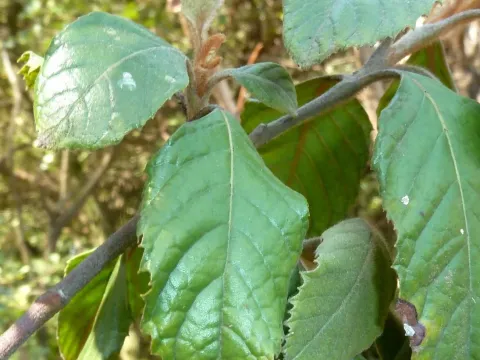
Curtisia
Curtisia
Curtisia, commonly known as the assegai tree (Curtisia dentata), is a monotypic genus belonging to the Cornaceae family. Native to the forests of South Africa, this evergreen species can reach significant heights in suitable ecological conditions.
What the section contains

Curtisia
The tree thrives in subtropical climates that offer consistent moisture and warmth. It is essential to protect young saplings from harsh, dry winds and heavy frost to ensure successful establishment and long-term development.
Regarding soil, Curtisia prefers deep, well-drained, fertile loams. It does not tolerate waterlogging, so planting on sites with a high water table requires the installation of drainage systems to prevent root rot.
Sunlight requirements vary depending on the age of the tree. While saplings benefit from partial shade, mature trees require full sun to develop a dense, healthy canopy and to produce fruits effectively.
Maintenance tasks include the application of organic mulch to regulate soil temperature and retain moisture. Regular monitoring of nutrient levels ensures the tree maintains its characteristic glossy foliage and steady growth rate.
The wood of Curtisia is highly prized for its durability and toughness. Historically, it was named the "assegai tree" due to the traditional use of its timber in manufacturing sturdy shafts for hunting spears.
In modern applications, its reddish, fine-grained wood is utilized in fine cabinet making, decorative turnery, and the construction of high-quality agricultural tools that require heavy-duty resistance.
Within agroforestry systems, Curtisia acts as a reliable windbreak. Its dense canopy reduces wind speeds, thereby protecting sensitive crops in nearby fields from mechanical damage and excessive transpiration.
The fruit of the Curtisia tree provides a valuable food source for local bird populations. Promoting this species helps restore the local biodiversity and natural balance on agricultural land.
Harvesting seeds for nursery propagation should be done once the fruits have fully ripened. Removing the pulp and drying the seeds in a ventilated area are necessary steps for ensuring high germination success during the next planting cycle.
Root diseases are the primary concern for Curtisia when grown in poorly drained soils. Preventing over-irrigation is the most effective way to avoid the development of pathogens that target the root zone.
Scale insects and aphids represent the most frequent pests. These insects congregate on tender young shoots and leaves, hindering the tree's overall vigor and promoting the growth of sooty mold.
Air circulation within the crown is vital to prevent fungal infections. Practitioners should engage in periodic pruning to thin out the center of the tree, which allows light and air to penetrate the interior foliage.
- Inspect foliage regularly for signs of leaf drop.
- Use integrated pest management to treat localized infestations.
- Sanitize tools between pruning sessions to prevent cross-contamination.
While the tree is relatively robust, prolonged dry spells can weaken it, making it more susceptible to opportunistic diseases. Providing supplemental water during periods of drought is crucial for maintaining resistance.