
Assegai tree
Curtisia dentata
Description
Growing requirements
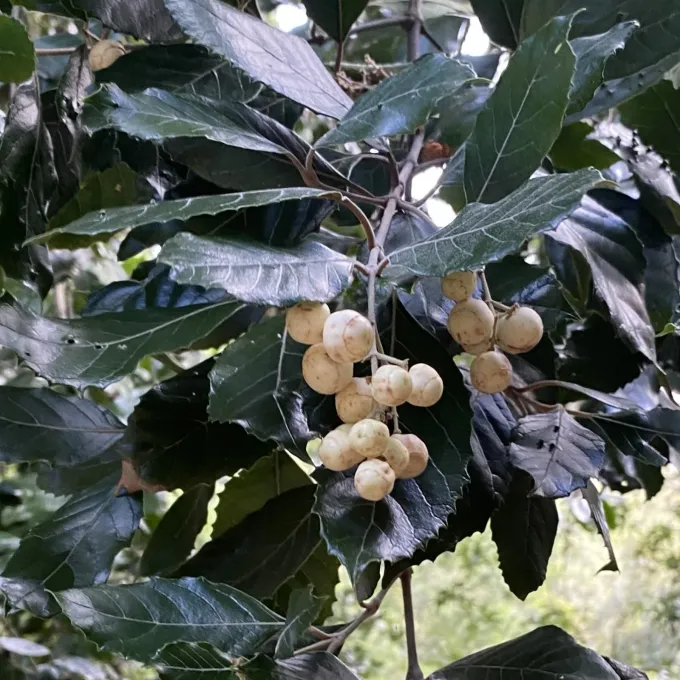
The Assegai tree (Curtisia dentata) is an evergreen species representing the Curtisiaceae family. Originating from the forests of South Africa, it is recognized for its glossy foliage and structural significance within local ecosystems.
Cultivation requires deep, fertile, and well-drained soils. While the species is somewhat adaptable, it performs best in environments that mimic its native moist habitat, ensuring consistent moisture availability without waterlogging.
The tree thrives in subtropical climates. It is sensitive to severe frost, which restricts its outdoor cultivation to milder zones or requires container management in temperate regions to protect it from extreme winter cold.
Light requirements evolve throughout the life cycle of the tree. Seedlings and young plants prefer dappled sunlight or partial shade, whereas mature trees require full sunlight to maintain their dense, robust canopy.
General maintenance includes monitoring soil nutrients and ensuring consistent irrigation during the peak growing season. Pruning may be necessary to shape the tree and improve air circulation within the crown, reducing the risk of fungal infections.
Harvesting
The economic value of Curtisia dentata is largely attributed to its wood. Historically known as the Assegai tree, it served as the primary material for spear shafts, reflecting the material's exceptional density and durability.
Modern applications of the timber focus on high-quality furniture making, fine woodturning, and cabinetry. The wood's fine grain and hardness make it a premium choice for items requiring longevity and aesthetic appeal.
The bark of the tree is a significant component in traditional medicine. It is sought after for its astringent properties, although the harvesting process must be managed sustainably to ensure the protection of individual trees and the species at large.
Ornamental use is another major sector. The tree's decorative leaves and attractive berries make it a popular addition to botanical gardens and landscaped estates in appropriate climate zones.
Sustainable production through plantations is the preferred approach for raw material extraction. By shifting from wild harvesting to controlled cultivation, landowners can support biodiversity while meeting the market demand for wood and medicinal ingredients.