
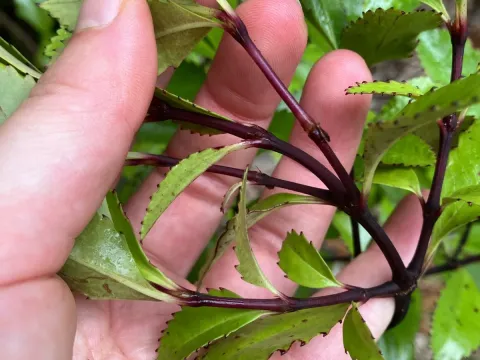
Ascarina
Ascarina
The genus Ascarina belongs to the Chloranthaceae family, a group of flowering plants known for their primitive characteristics. These plants typically manifest as evergreen trees or shrubs, possessing a unique evolutionary lineage within the angiosperms.
What the section contains

Ascarina
The native distribution of Ascarina is restricted to the tropical and subtropical regions of the Pacific Ocean. Major concentrations are found in New Zealand, New Caledonia, Fiji, and Madagascar, where they often thrive in dense, moist forest environments.
Ascarina requires specific environmental conditions, including high humidity and fertile, well-draining soils. They are sensitive to environmental stress, particularly drought and extreme temperature fluctuations, which makes them suited for stable, humid ecosystems.
Botanically, the plants exhibit opposite leaf arrangements and small, simplified flowers that lack perianths. The flowers are typically arranged in spikes or panicles, facilitating wind pollination, which is a key adaptation for this family.
Economically, Ascarina is not a widely cultivated crop in the traditional agricultural sense. Their significance lies primarily in conservation biology and their role as specialized components of forest ecosystems, with limited use in timber or horticultural practices.