
Giant chickweed
Myosoton aquaticum (L.) Moench
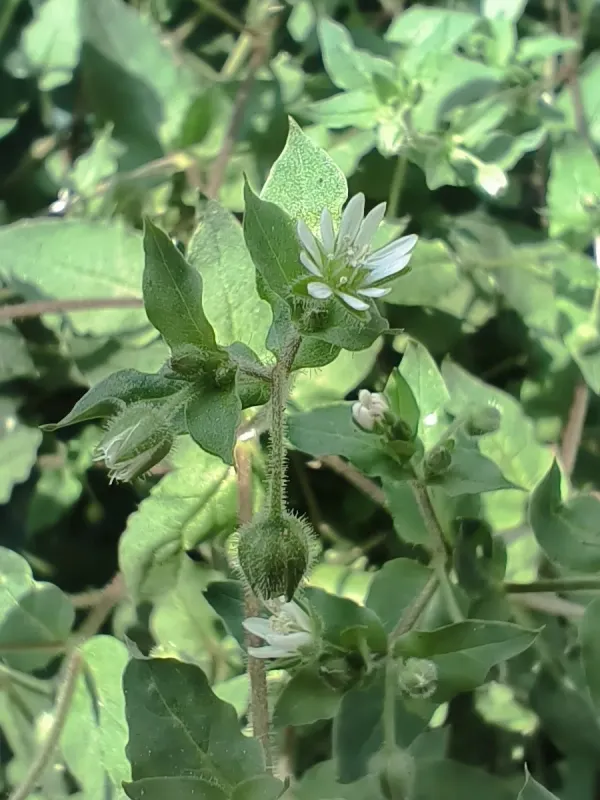
Description
Growing requirements
Giant chickweed (Myosoton aquaticum) is a perennial herbaceous plant belonging to the Caryophyllaceae family. It is characterized by its sprawling, procumbent stems and ability to thrive in moist environments across temperate regions.
The plant demonstrates a strong preference for damp, nutrient-rich soils, particularly those with high nitrogen content. It is commonly found in riparian zones, wet meadows, and disturbed agricultural sites where moisture levels are consistently high.
Its natural range encompasses most of Eurasia, where it acts as an opportunistic species. In agricultural settings, its adaptability allows it to persist in shaded areas or sites with poor drainage, making it a challenging weed in some cultivation systems.
Botanically, the plant is identified by its opposite, cordate-based leaves and white, deeply bifid petals. Its root system is capable of vegetative propagation through nodes, which allows the plant to form dense colonies quickly.
While historically sometimes included in forage mixtures for flooded pastures, modern intensive agriculture views it primarily as a weed. Its management is essential for maintaining the productivity of crops sensitive to nutrient and water competition.
Main diseases and pests
Giant chickweed can serve as an alternative host for various pathogens and pests that threaten commercial crops. Its presence in field margins can facilitate the transmission of fungal diseases, such as mildew, to adjacent crops.
Control strategies should focus on physical disruption. Deep tillage and mechanical cultivation are effective in damaging the root systems, thereby preventing the plant from establishing persistent mats within field boundaries.
Soil water management remains a primary preventive measure. Improving the drainage capacity of a field inherently reduces the competitive edge that giant chickweed has over standard crop varieties.
Chemical intervention involving broad-spectrum or selective herbicides may be necessary in severe infestations. Application should be timed according to the growth stage of both the weed and the surrounding crop to minimize yield risks.
Integrated weed management, including crop rotation and the use of clean seed stocks, is the best approach to mitigate the risks associated with this species in diverse farming systems.