
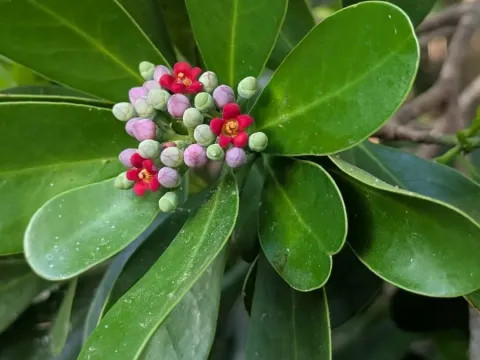
Canella
Canella
Canella (Canella winterana) is a prominent evergreen tree belonging to the family Canellaceae. It is recognized for its thick, leathery leaves and highly aromatic bark, which has been historically valued in various traditional industries.
What the section contains

Canella
The native distribution of this crop includes the tropical regions of the Caribbean, Florida, and the Bahamas. The tree naturally thrives in limestone-based soils and coastal thickets, where it is exposed to consistent moisture and tropical temperatures throughout the year.
Cultivation requirements for Canella are strictly limited to frost-free environments with high atmospheric humidity. The plant is sensitive to thermal stress, necessitating a stable climate to maintain its vigorous growth and the synthesis of aromatic compounds within its tissues.
Agronomic practices focus on providing high-quality drainage systems to avoid root waterlogging, which is the primary cause of plant failure. Regular, moderate irrigation combined with organic mulching helps to simulate the natural forest floor conditions necessary for the sapling stage.
The primary economic output is the harvest of its bark, which contains essential oils similar to those found in cinnamon. This makes it a specialized crop for the pharmaceutical and culinary industries, where it is utilized for flavoring and therapeutic applications.
Canella trees are susceptible to several fungal diseases, particularly those that target the root system in poorly drained soil. Symptoms often include yellowing leaves and wilting branches, which require immediate removal of the affected material to prevent wider spreading.
Common agricultural pests affecting Canella include scale insects and mealybugs. These organisms congregate on the bark and tender leaves, depleting the plant's resources and potentially creating entry points for secondary bacterial infections.
Integrated Pest Management (IPM) is the recommended approach for maintaining healthy groves. By promoting natural predators and using precise application of horticultural oils, growers can manage pest populations without damaging the quality of the aromatic bark.
Sanitation of the plantation area is crucial to prevent the accumulation of leaf litter where fungal spores could germinate. Maintaining adequate spacing between trees ensures good airflow, which is a natural deterrent to many foliage-based pathogens.
Regular inspections are mandatory for commercial operations. Early identification of stress signs allows for targeted interventions, ensuring that the valuable bark remains healthy and suitable for market processing.
Harvesting Canella involves the manual stripping of the bark from the trunks and major limbs of mature trees. This process must be conducted with extreme precision to avoid injuring the tree's vascular system, ensuring longevity and sustained production.
Once collected, the bark must undergo a drying phase in shaded, airy conditions. Proper curing is essential to stabilize the aromatic oils, preventing oxidation or the development of mold, which would degrade the value of the raw material.
The maturity of the tree is the primary factor in determining the start of the harvest cycle, which generally begins when the trunk reaches sufficient diameter. A systematic approach ensures that individual trees are not over-harvested in any single season.
Following the drying process, the product is graded based on oil content and physical integrity. Packaging in humidity-resistant materials preserves the potency of the aromatic compounds, which is critical for meeting international trade standards.
Efficient harvesting techniques involve the use of specialized tools designed to reduce physical trauma to the living tree. By respecting the natural cycles of growth and regeneration, sustainable farming practices enable long-term yield for producers.