
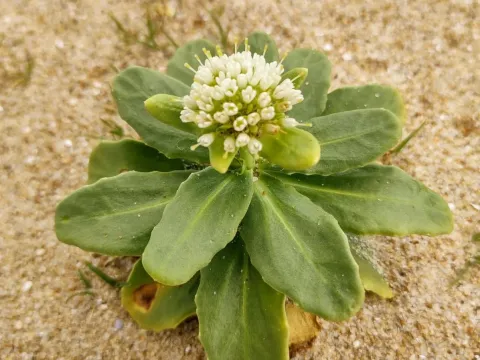
Calycera
Calycera
The genus Calycera consists of herbaceous plants that propagate primarily through seeds in their native habitats. Successful sowing requires understanding the dormancy mechanisms often present in seeds from arid environments.
What the section contains

Calycera
In a controlled agricultural setting, seeds should be sown in early spring. The soil temperature must be consistent, ideally between 15 and 20 degrees Celsius, to ensure uniform germination rates across the plot.
Seedbeds should be prepared with a high percentage of sand or perlite to facilitate excellent drainage. Given the small size of the seeds, they should be lightly covered with a thin layer of fine substrate to prevent drying out while maintaining light exposure.
Watering techniques must be gentle, using misting to avoid displacement of the seeds. Once seedlings reach the stage of producing two true leaves, they can be hardened off for transplanting into permanent locations.
The spacing between plants should be sufficient to ensure airflow, as overcrowding can lead to dampness and subsequent failure of the seedlings during the critical initial weeks of development.
Calycera is the type genus of the family Calyceraceae. These plants are native to South America, spanning territories from high-altitude Andean regions to the drier plains of Argentina and Chile.
They are adapted to high light intensity and low water availability. Consequently, the optimal site for cultivation should be fully exposed to the sun and protected from stagnant water, which is the primary enemy of the root system.
Soil requirements are relatively undemanding; however, the substrate must be well-drained. Calycera thrives in neutral to slightly alkaline soils, which mimic the natural geology of its native environment.
While these plants can withstand periods of drought once established, supplemental irrigation during prolonged dry spells will improve plant vigor and flowering potential.
Due to their evolutionary history in challenging environments, they possess mechanisms to conserve moisture and are generally resilient against extreme fluctuations in ambient temperature.
Root-related pathologies are the most significant threat to the survival of Calycera. Excessive soil moisture leads to fungal infections that can rapidly compromise the vascular system of the plant.
Insect pests such as leaf miners and caterpillars may cause structural damage to the foliage. These pests can significantly reduce the photosynthetic capacity of the plant if left unmanaged.
Aphids are another common nuisance, often found on the soft tissue of the inflorescence. Besides direct feeding, they can act as vectors for various plant viruses that affect overall growth.
Management of these threats involves routine scouting and the use of appropriate pesticides only when necessary. Integrated Pest Management (IPM) strategies are recommended to maintain ecological balance.
Regular weeding is essential not only to prevent competition for nutrients but also to improve airflow around the base of the plant, thereby reducing the humidity levels that favor fungal growth.