
Calycera crassifolia
Calycera crassifolia
Description
Growing requirements
Calycera crassifolia is a specialized plant species belonging to the Calyceraceae family. Originating from the arid and high-altitude regions of South America, specifically Argentina and Chile, this plant is well-adapted to environments where most other crops would fail due to water scarcity.
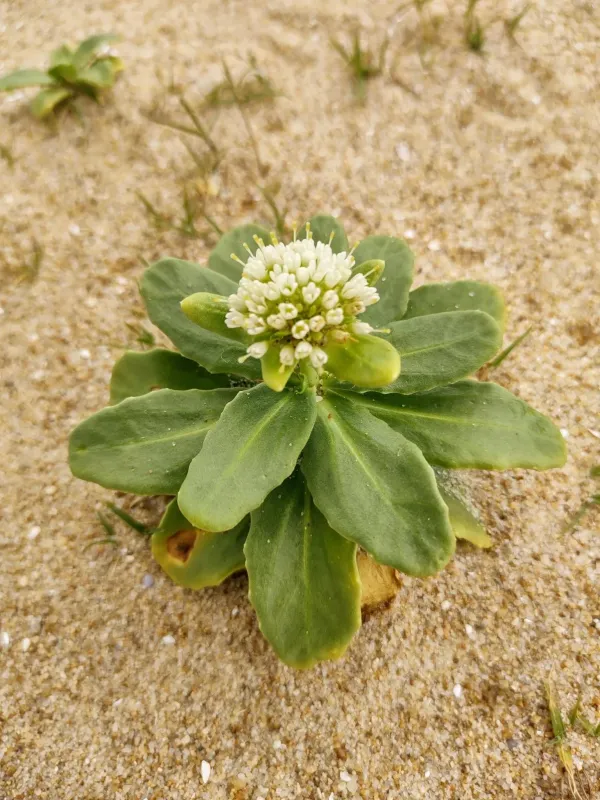
The botanical structure of the plant is defined by its succulent-like properties. Its thick, fleshy leaves act as reservoirs for moisture, allowing the plant to maintain metabolic processes even during prolonged dry spells, a trait essential for survival in its natural habitat.
In terms of soil requirements, Calycera crassifolia thrives in well-draining, sandy, or rocky soils. It is highly sensitive to waterlogging, which often leads to rapid deterioration of its root system; therefore, ensuring proper aeration in the root zone is a critical agronomic factor.
Environmental requirements include a need for high light intensity. The plant performs best when exposed to direct sunlight for most of the day, as this promotes compact growth and maintains the structural integrity of its leaves and reproductive organs.
Agrotechnical management should focus on a conservative irrigation strategy. Overwatering is the most significant threat to the health of the plant, necessitating a careful approach to water application and the selection of appropriate planting sites that facilitate natural drainage.