
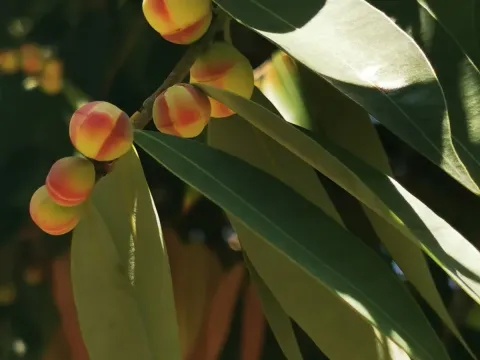
Mesua
Mesua
Propagation of Mesua is typically carried out using seeds, which lose viability rapidly after harvesting, so sowing must be performed immediately after cleaning the pulp.
What the section contains

Mesua
In tropical environments, seeds germinate within 10 to 20 days, provided there is high soil moisture and ambient temperatures consistently above +25°C.
In nursery conditions, seeds are sown in containers with well-drained substrate, ensuring that young seedlings are protected from direct harsh sunlight.
Transplanting seedlings to their permanent location in an orchard or plantation is best timed for the start of the rainy season to ensure quick establishment.
For commercial cultivation, it is critical to maintain a spacing of at least 6 to 8 meters between trees to accommodate the significant spread of the canopy.
Mesua belongs to the Clusiaceae family and is an evergreen tree, widely known as the "ironwood tree" due to the extreme density and hardness of its timber.
This crop is highly thermophilic and moisture-loving, thriving best in tropical climate zones with annual temperatures ranging from +20°C to +30°C and abundant rainfall.
The plant prefers deep, fertile, loamy, or sandy-loam soils with excellent drainage, as it cannot tolerate waterlogging in the root zone.
While Mesua is somewhat shade-tolerant in its juvenile stage, adult specimens require bright sunlight to develop a dense canopy and ensure abundant flowering.
The species is extremely sensitive to frost and sudden fluctuations in air humidity, which strictly limits its cultivation to tropical regions of South and Southeast Asia.
The economic use of Mesua focuses primarily on harvesting its premium timber, aromatic essential oils from flowers, and medicinal raw materials from various parts of the tree.
Flowering typically commences when the tree is 5 to 8 years old, after which it yields aromatic flowers that are highly valued in the perfume and cosmetic industries.
The fruits of Mesua contain oil-rich seeds, with fat content reaching up to 60–70%, making them a promising source of vegetable oils for biochemical and industrial applications.
Mesua timber is ranked among the strongest in the world, finding applications in bridge construction, railway sleepers, and luxury furniture due to its high decay resistance.
The overall productivity of a plantation depends on tree density and nutrient management, with individual trees remaining economically productive for many decades.
Mesua possesses a high natural resistance to most agricultural pests, largely due to the presence of secondary metabolites and resinous compounds in its tissues.
In overcrowded conditions or areas with poor air circulation, the tree may become susceptible to fungal infections that manifest as leaf spotting.
The primary threat to young seedlings is root rot, which typically develops under conditions of waterlogged soil and inadequate drainage systems.
Occasional damage to foliage by insect phytophages may occur, though massive outbreaks affecting the tree's health are documented very infrequently.
Disease prevention relies strictly on good agricultural practices, including water management, timely sanitary pruning, and ensuring optimal planting density.
Harvesting flowers for the fragrance industry is conducted during the early morning hours when the concentration of essential oils is at its peak before petal fall.
Fruits are gathered once they reach full maturity, indicated by the outer skin turning brown and naturally splitting open on the tree.
After collection, the fruits are dried under shelter to facilitate the extraction of seeds, which are then processed for oil extraction or utilized for seed stock.
Timber harvesting must adhere to ecological standards and sustainable forest management plans, accounting for the long growth cycle of the ironwood tree.
Manual labor remains the predominant method for harvesting due to the wide, spreading nature of the canopy and the specific terrains typical of tropical forest habitats.