
Biscutella didyma
Biscutella didyma L.
Description
Sowing dates
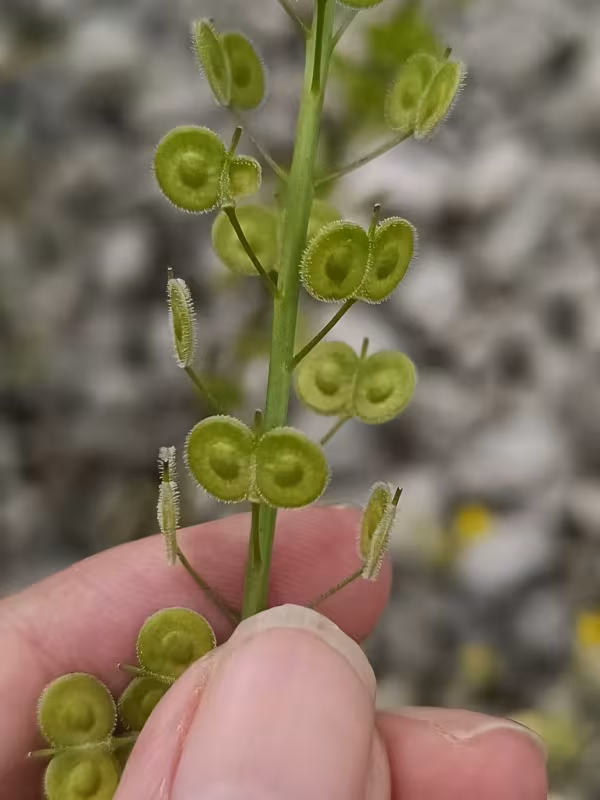
Biscutella didyma is a member of the Brassicaceae family, recognized for its distinct fruit shape that resembles a double shield.
The plant initiates its life cycle in early spring when environmental conditions allow for rapid germination and seedling establishment.
Sowing should be performed in well-prepared, loose soil to ensure the seeds have optimal contact for consistent moisture absorption.
Shallow planting depth is crucial, as the seeds require slight exposure to light and oxygen to break dormancy and sprout successfully.
The species exhibits strong adaptation capabilities, allowing it to propagate effectively across varied agricultural environments.
Growing requirements
This plant thrives in sunny, open locations, making it highly dependent on high solar radiation for its metabolic and growth processes.
It prefers well-drained soils that prevent water stagnation, which is critical for maintaining the health of its root system.
Biscutella didyma is well-adapted to alkaline or neutral soil types, which are characteristic of its native Mediterranean regions.
Moderate temperatures ranging from 15 to 25 degrees Celsius are ideal for ensuring the steady development of vegetative and reproductive biomass.
Drought resistance is one of the key botanical features, allowing the plant to survive in semi-arid conditions without external irrigation.
Main diseases and pests
Common agricultural pests such as flea beetles can cause significant damage to the leaf tissue during the early stages of plant growth.
Fungal infections, particularly powdery mildew, pose a threat when the plant is grown in areas with poor airflow and high humidity levels.
Aphid infestations are frequently observed on the flowering stalks, which can lead to reduced seed quality and lower overall yields.
Effective management includes maintaining proper distance between plants and ensuring the soil is free from pathogens that target brassicas.
Monitoring the crop for early signs of leaf discoloration or wilting is essential for timely intervention and preservation of the planting area.