
Himalayan Mayapple
Podophyllum hexandrum Royle
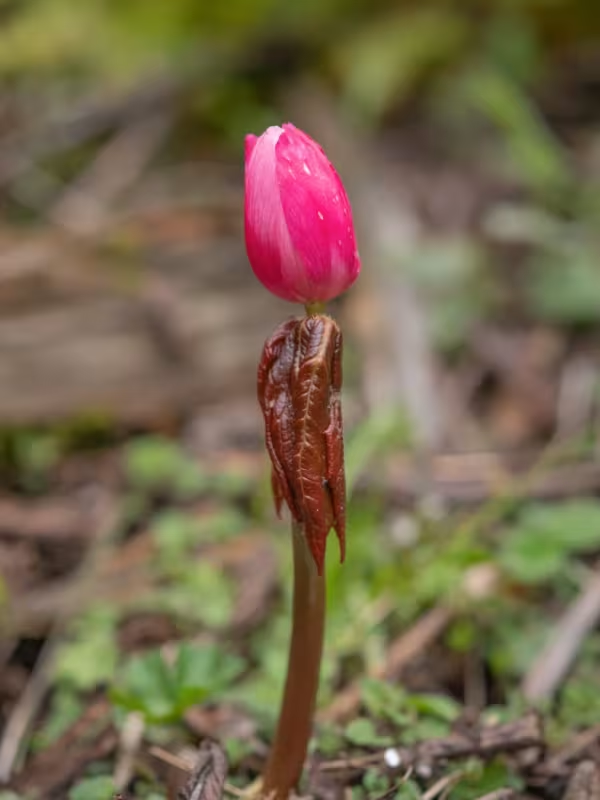
Description
Sowing dates
Himalayan Mayapple (Podophyllum hexandrum Royle) is a perennial herbaceous plant belonging to the Berberidaceae family, native to the alpine regions of the Himalayas.
Propagation is typically done through seeds or the division of rhizomes, with rhizome division being the preferred method for faster maturation of commercial crops.
Seeds require a prolonged period of cold stratification, often taking several months, to break dormancy and achieve successful germination in a controlled environment.
Direct sowing in outdoor plots is most effective when done in late autumn, allowing the seeds to undergo natural winter cycles before sprouting in early spring.
When dividing rhizomes, growers must ensure that each segment contains at least one viable growth bud to facilitate quick establishment in the new planting site.
Growing requirements
This species thrives in cool, moist, and high-altitude climates, making it sensitive to high summer temperatures and prolonged drought conditions in cultivation.
The ideal soil profile includes rich, loamy, and well-draining forest soil with high organic matter content and a slightly acidic to neutral pH level.
As a forest-floor species, it requires partial to deep shade. Excessive exposure to direct sunlight can severely damage the foliage and stunt the development of the plant.
Proper drainage is critical, as waterlogged conditions in winter and spring will rapidly lead to root rot and the loss of entire sections of the cultivated plantation.
Adding a thick layer of organic mulch in the fall helps retain soil moisture, protect the rhizomes from freezing temperatures, and improve overall soil fertility.
Yield
The economic value of this crop is based on its roots and rhizomes, which contain podophyllotoxin, a compound widely used in cancer research and medicine.
Plants generally reach a stage suitable for harvesting between 3 and 5 years after planting, as the concentration of active alkaloids peaks during this maturity phase.
Average yield expectations are moderate, often ranging between 1.5 and 3 metric tons of dried root mass per hectare, depending on site selection and cultivation care.
The slow growth rate of the Himalayan Mayapple requires long-term commitment from growers, as the crop cycle is significantly longer than that of typical vegetable plants.
Optimizing yield involves consistent soil moisture management and the protection of plants from herbivore pressure during the initial stages of vegetative growth.
Main diseases and pests
The primary threats include fungal pathogens such as root rot and leaf spot, which are frequently triggered by poor soil aeration and excessive humidity around the root zone.
Slugs and snails pose a significant risk to young, emerging foliage during the spring months and must be managed using physical barriers or organic pest control methods.
Effective management strategies involve ensuring adequate space between plants to allow for airflow and minimizing stagnant water in the plantation area.
Weed control is mandatory, particularly in the first two years of the crop's life, as the Mayapple is a slow-growing plant that easily loses out in competition for nutrients.
Preventative care, such as crop rotation and the use of healthy planting stock, is essential to mitigate the impact of soil-borne diseases that can devastate the yield.
Harvesting
The harvest occurs in the autumn season, once the aerial parts of the plant begin to wither and die back, signaling that the plant has stored maximum energy in the roots.
Rhizomes are carefully excavated to avoid mechanical injury, as damaged roots are more susceptible to rot and reduced quality during the storage process.
Post-harvest processing involves thorough cleaning of the rhizomes to remove all soil particles, which is vital for meeting pharmaceutical quality standards for raw herbal materials.
The drying process must be strictly controlled at temperatures not exceeding 50°C to preserve the chemical integrity of the active alkaloids found within the plant tissue.
Once dried to the required moisture content, the product is packed in moisture-resistant containers for transport to pharmaceutical processing facilities for secondary extraction.