
American mayapple
Podophyllum peltatum L.
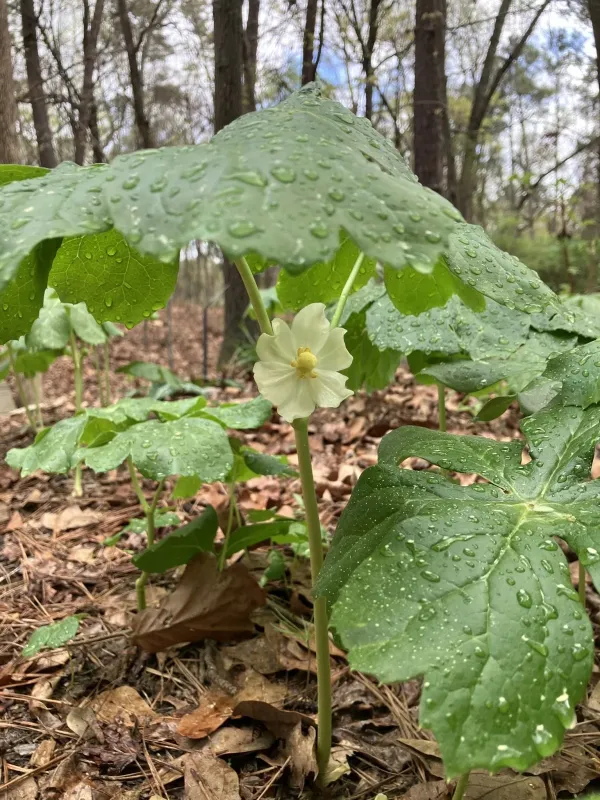
Description
Sowing dates
The propagation of Podophyllum peltatum is most successfully achieved through rhizome division. This method is the standard for commercial cultivation, allowing for uniform growth rates and predictable establishment of new plantings in the field.
Division is performed during the dormant season, typically in early spring or autumn. Each rhizome segment should possess at least one healthy, well-developed bud to ensure viable regeneration and vigorous initial growth.
Seed propagation is possible but challenging due to the need for cold stratification. Seeds require a period of exposure to cool, moist conditions for several months to successfully break physiological dormancy before germination occurs.
When planting, rhizomes should be placed at a depth of 8 to 10 centimeters. Proper spacing, typically 30 centimeters between plants, is essential to balance the need for rapid area coverage with the necessity of maintaining adequate airflow.
New plantations require consistent monitoring for moisture levels immediately following planting. Establishing the rhizomes in a sheltered, shaded environment mimics the natural forest floor habitat and maximizes survival rates.
Growing requirements
As a member of the Berberidaceae family, the American mayapple thrives in nutrient-rich, well-draining soils. A substrate high in organic matter, such as leaf mold or compost-amended soil, is ideal for supporting its root development.
Water management is the most critical agronomic factor. The plant requires a steady supply of moisture throughout the growing season and cannot tolerate prolonged drought conditions, which can lead to early senescence of the foliage.
Climate adaptability is one of the plant's strengths, provided it is grown in temperate regions with distinct seasonal changes. It requires winter dormancy, which is vital for the plant's metabolic reset and subsequent spring emergence.
Nutrient requirements are modest but steady. Incorporating slow-release organic fertilizers during site preparation provides the necessary foundation for the multi-year development required before the first harvest.
Weed control is essential during the initial growth years. Because the root system is shallow, manual weeding is preferred over mechanical tillage, which risks causing physical damage to the developing rhizome network.
Main diseases and pests
Podophyllum peltatum is generally robust, but it can be susceptible to fungal infections, particularly leaf spots, if the planting density is too high or if airflow is poor. These conditions allow pathogens to flourish.
Soil-borne pests, such as wireworms or white grubs, pose a risk to the rhizomes. These pests can weaken the plant and introduce opportunistic diseases, necessitating vigilant monitoring of the soil health prior to planting.
Root rot is a common issue in poorly drained sites or areas with standing water. Preventing waterlogging through the use of proper land grading and drainage systems is the primary defense against such problems.
Pest damage to the foliage is relatively rare due to the inherent toxicity of the plant. However, in specific microclimates, slugs and snails may cause minor damage to emerging leaves in the early spring.
Integrated pest management strategies focusing on hygiene, crop rotation, and the selection of disease-free planting stock are the most sustainable ways to manage potential threats in a commercial setting.
Harvesting
Harvesting of the American mayapple is a long-term investment, as the rhizomes take approximately 4 to 5 years to reach the required level of podophyllotoxin concentration for pharmaceutical use.
The harvest occurs in the autumn, after the aerial parts have withered. This timing ensures that the plant has translocated its maximum stored energy reserves back into the rhizomes, resulting in a higher quality raw material.
Rhizomes are mechanically lifted from the soil, cleaned, and washed to remove all debris. Any sections showing signs of decay or damage are separated and discarded to maintain the quality of the final batch.
Drying is a critical phase where temperature control is paramount. Using forced-air dryers at a controlled temperature ensures that the active components remain stable and are not degraded by excessive heat during the moisture removal process.
Storage must take place in a climate-controlled, dry environment. Due to the toxic nature of the compounds, all handled materials must be clearly labeled and stored away from food products or livestock areas.