
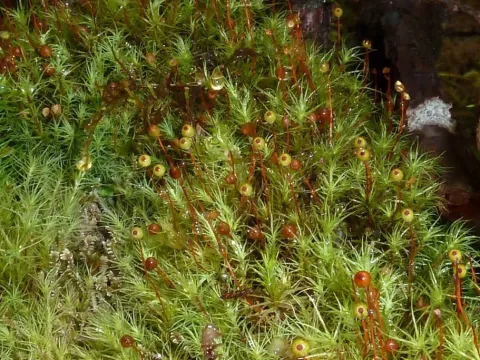
Bartramia
Bartramia
Bartramia is a genus of mosses belonging to the Bartramiaceae family, known for its distinctive appearance and dense growth habit. These plants are often used in specialized horticultural applications where moisture-retaining, low-lying greenery is required.
What the section contains

Bartramia
Native to temperate and arctic regions, as well as high-altitude tropical zones, Bartramia thrives in environments with consistent atmospheric humidity. Its natural habitat includes damp rocky crevices, stream banks, and shaded forest understories, where it can access reliable water sources.
Botanically, the plant is characterized by erect stems densely covered with narrow, lanceolate leaves, often giving the colony a bluish-green aesthetic. The sporophytes arise above the foliage, contributing to the structural complexity of the moss mat.
Success in cultivation requires substrates with low pH levels and high organic content. The plant is highly sensitive to soil salinity and lime, which can inhibit growth and lead to the degradation of the moss colony, making site selection crucial.
From a functional standpoint, Bartramia is utilized in erosion control for damp slopes and in the creation of ecological landscapes. Its high water retention capacity makes it a valuable asset for maintaining humidity in micro-environments.
The primary threats to Bartramia include fungal pathogens that emerge under conditions of poor air circulation and excessive standing water. Providing adequate ventilation is the most effective way to prevent the development of mold and decay.
Insects and nematodes pose a secondary risk, as they can damage the delicate cellular structure of the moss stems. Integrated pest management, focusing on physical barriers and environmental control, is preferred over chemical interventions.
Atmospheric pollution, particularly sulfur dioxide, is highly toxic to these mosses. As sensitive organisms, they require environments free from heavy industrial contamination to maintain their health and characteristic coloration.
Improper irrigation, specifically the use of hard water, can lead to the accumulation of mineral salts that interfere with nutrient uptake. Distilled or rainwater is recommended to avoid long-term toxicity and growth stagnation.
Effective maintenance involves regular monitoring for signs of stress, such as discoloration or thinning of the mats. Proactive care and strict adherence to the prescribed micro-climate parameters ensure the longevity of the plant population.