
Anthoceros
Anthoceros
Anthoceros is a genus of hornworts belonging to the family Anthocerotaceae. It is a primitive non-vascular plant that is not cultivated for agricultural production, but it serves as a significant subject for botanical studies regarding the evolution of land plants.
What the section contains

Anthoceros
The plant body consists of a thallus that spreads horizontally over the soil surface. This structure allows the plant to anchor itself effectively in damp environments, utilizing rhizoids for absorption rather than a complex root system found in higher plants.
Optimal growth requires high moisture levels and a shaded environment. Anthoceros is typically found in moist, clay-rich, or loamy soils where evaporation rates are low, such as riverbanks, shaded slopes, or disturbed agricultural lands.
A distinctive biological trait of Anthoceros is the symbiotic relationship with Nostoc cyanobacteria. These bacteria reside in mucilage-filled cavities within the thallus, facilitating nitrogen fixation, which provides a competitive advantage in nutrient-poor environments.
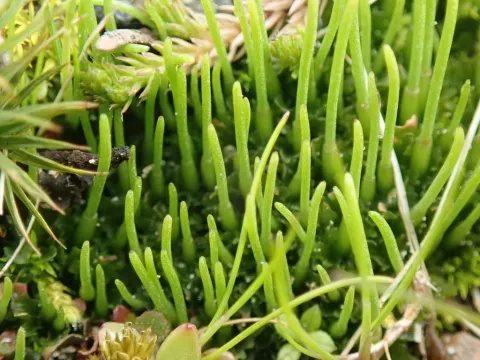
The life cycle involves the production of horn-like sporophytes that grow vertically from the thallus. These structures are unique because they contain stomata and can continue to grow for an extended period, which distinguishes them from the sporophytes of true mosses.