
Field hornwort
Anthoceros agrestis
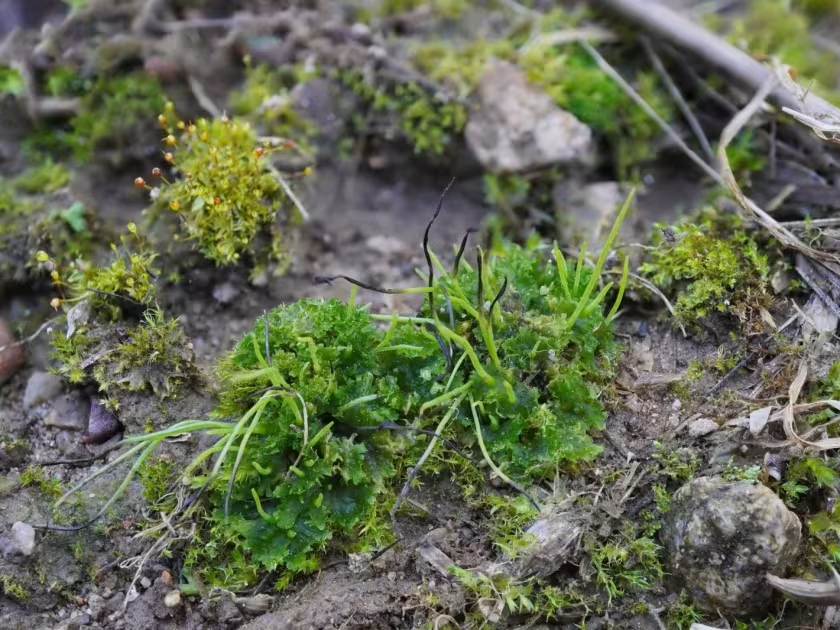
Description
Growing requirements
Field hornwort, or Anthoceros agrestis, belongs to the family Anthocerotaceae within the division Anthocerotophyta. It is a primitive, non-vascular plant that acts as a specialized component within agricultural environments.
This species thrives in open, damp habitats where the soil surface has been recently disturbed. It is typically found in agricultural fields with heavy clay or loamy soils, particularly in areas prone to seasonal waterlogging.
Successful growth of the thallus requires high levels of moisture. Unlike traditional crops, it relies on direct absorption of water from the substrate, making it highly dependent on the micro-topography of the soil surface.
The plant prefers temperate climates and is most active during periods of high rainfall. It lacks the capacity to withstand prolonged dry spells, which often leads to the dormancy or death of the visible thallus stage during summer heat.
A distinctive feature of field hornwort is its symbiotic relationship with Nostoc cyanobacteria. This relationship enables the plant to fix atmospheric nitrogen, allowing it to colonize nutrient-poor sites where other vegetation may struggle.
Main diseases and pests
Field hornwort is not a crop, but it is extremely susceptible to modern chemical agricultural practices. The application of broad-spectrum herbicides significantly reduces its population density in cultivated fields.
Mechanical tillage and soil cultivation represent major threats to this species. Frequent disturbance can bury the spores or damage the delicate thallus, leading to localized declines in population numbers.
Competition from dense crop canopies is a natural inhibitor. Field hornwort requires sufficient light to photosynthesize, and it is usually suppressed by fast-growing cereal or row crops that block sunlight.
There are no recorded major pests or diseases that target this species specifically within an agricultural context. However, changes in soil pH and chemical fertilizer runoff can disrupt the sensitive symbiotic balance with cyanobacteria.
While the plant can recover quickly from its buried spore bank, its long-term survival in high-intensity farming systems is limited. It primarily persists in field margins, ditches, or areas where cultivation frequency is low.