
Lentille verte du Berry
Protected Geographical Indication (PGI)
Description
Sowing dates
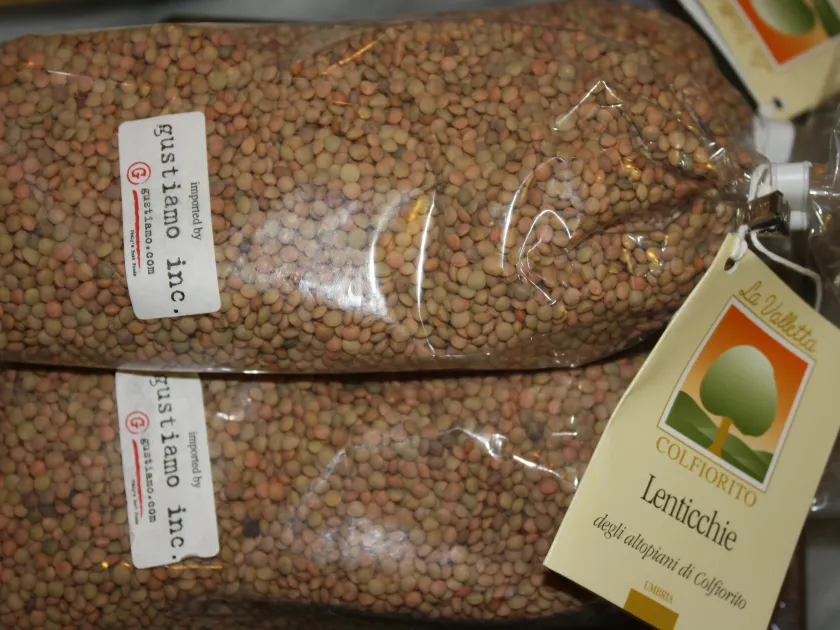
Lentille verte du Berry (Lens culinaris) is a unique lentil variety from the Berry region of France, protected by the PGI (Protected Geographical Indication) label. This pulse crop belongs to the Fabaceae family and is highly valued for its superior nutritional profile and culinary texture.
Sowing occurs in early spring once soil temperatures reach a stable +5...+8 degrees Celsius. Early planting is vital to ensure the crop establishes a robust root system before the onset of summer heat, which is typical for central France.
The seeding rate is typically set at 200–250 seeds per square meter to achieve optimal crop density. This spacing is essential for suppressing weeds and maximizing yield potential in the initial growth phases.
In terms of crop rotation, lentils are best grown after cereal crops. This sequence prevents the accumulation of soil-borne pathogens specific to leguminous plants and helps maintain soil health.
Seeds are sown at a depth of 3–5 centimeters. Uniform depth is critical for ensuring simultaneous emergence, which simplifies subsequent field management and promotes a uniform harvest period.
Growing requirements
The crop thrives in temperate climates, preferring mild spring conditions and stable temperatures. It exhibits good frost tolerance during the seedling stage but is sensitive to significant temperature fluctuations during the flowering period.
Soil requirements include neutral to slightly alkaline pH levels. Loamy or marly soils are preferred as they provide excellent drainage, preventing moisture stagnation which the plant dislikes.
Lentils are moderately drought-tolerant due to their taproot system, but prolonged drought during pod filling can severely impact grain quality. Thus, soil structure that retains moisture without waterlogging is ideal.
Preparation of the seedbed should be thorough, aiming for a fine tilth. This ensures good seed-to-soil contact, which is necessary for rapid germination and establishment in the cool spring soil.
Nitrogen fertilization should be managed carefully, as excessive nitrogen promotes excessive foliage growth, increases lodging, and can reduce yield quality. The crop relies partly on biological nitrogen fixation through root nodules.
Main diseases and pests
The lentil weevil (Bruchus lentis) is a primary pest, as larvae damage the seeds both in the field and in storage. Integrated pest management, including systemic insecticides during the budding phase, is crucial.
Diseases such as Ascochyta blight and Anthracnose pose significant risks, especially in humid conditions. These pathogens can cause necrotic lesions on leaves and stems, significantly reducing the photosynthetic capacity of the crop.
Fusarium root rot is common in poorly drained soils. Prevention is centered on maintaining long intervals in crop rotation and ensuring that seed stocks are disease-free and properly treated before sowing.
Aphids can cause direct damage and serve as vectors for various viral diseases. Regular monitoring throughout the growing season is recommended to detect infestations at early stages.
- Rotate crops every 4–5 years to break disease cycles.
- Use certified, disease-free seed material.
- Implement mechanical weed control early.
- Apply chemical treatments only when threshold levels are reached.
Harvesting
Harvesting begins when pods transition to a brown or yellow-brown color and seeds become firm and display their characteristic luster. Timing is essential, as pods can shatter if left too long in the field.
Combines are adjusted with low drum speeds to minimize grain breakage. Harvest moisture content should ideally be between 14% and 16% to ensure long-term storage safety without excessive drying costs.
Post-harvest processing involves cleaning and sizing to remove debris and damaged seeds. This ensures the final product meets the strict quality standards required for PGI certification.
Storage facilities must be dry, well-ventilated, and protected from stored-product pests. Regular monitoring of grain temperature and moisture is necessary to prevent spoilage during the storage period.
The reputation of Lentille verte du Berry relies on these precise post-harvest handling steps, which preserve the unique taste and texture that distinguish this protected culinary product.