
Daemonorops
Daemonorops
Daemonorops is a genus of climbing palms within the Arecaceae family, closely related to the commercially significant rattan palms. These plants are indigenous to the lush tropical rainforests of Southeast Asia, thriving in regions like Indonesia, Malaysia, and the Philippines.
What the section contains
Daemonorops
The crop requires a stable, hot, and humid tropical climate with minimal seasonal fluctuations. It flourishes in nutrient-rich, well-draining forest soils that offer sufficient organic matter for sustained growth.
In its natural habitat, Daemonorops uses other trees as vertical supports, rapidly growing upwards to access sunlight. When cultivated, the plants require protection from high winds and a managed environment that mimics the understory conditions of a rainforest.
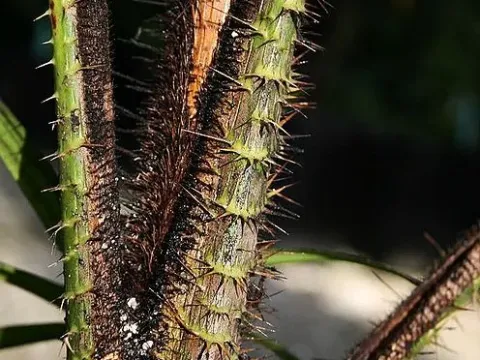
The plant is biologically characterized by its hooked spines found on stems and leaf sheaths, which serve as a defense mechanism against herbivores and facilitate climbing through dense vegetation.
Propagation is primarily achieved through seeds, although the species exhibits a slow initial growth phase. Successful agricultural management involves strict soil temperature control and early weed suppression.
Daemonorops is primarily valued for two economic products: the medicinal resin known as "dragon's blood" and the durable, flexible stem material commonly referred to as rattan.
Dragon's blood resin is extracted from the fruits of the plant via mechanical processing. It remains in high demand for traditional medicine, high-end varnishes, paints, and as a natural dye in textile manufacturing.
The stems of the plant are harvested for their exceptional strength and flexibility, making them a preferred raw material for the high-quality furniture industry, basketry, and architectural crafts.
Productivity is contingent upon plantation maturity and sustainable harvesting practices. Proper spacing and age-based selection are essential for maintaining a high yield of top-tier industrial material.
Modern commercial practices focus on maximizing the value of resin extraction while ensuring the regeneration of the forest ecosystem to maintain long-term production levels.
Fungal infections pose a significant risk to Daemonorops plantations, particularly in environments with poor air circulation and excessive moisture, which can lead to stem rot.
Wood-boring insects are the primary pests that damage the stems, causing significant economic losses by compromising the structural integrity of the harvested rattan material.
Deforestation and habitat loss are the most critical threats to the species' long-term survival. Sustainable agroforestry is essential to preserve the wild populations alongside commercial cultivation.
Effective pest management involves regular monitoring and sanitary procedures, such as pruning infected branches to prevent the spread of diseases within the plot.
Balanced plant nutrition and controlled density help reduce plant stress, which acts as the best natural defense against typical tropical pathogens and insect attacks.
The harvesting of fruits for dragon's blood resin is a delicate manual process, timed to coincide with peak resin accumulation to ensure the highest quality of the final product.
Rattan stem harvesting requires expert assessment to distinguish between mature stalks and juvenile growth, ensuring only the most durable parts are collected for industrial use.
Post-harvest processing includes cleaning the stems of spines and debris, followed by careful drying. This is a critical step to prevent mold development and protect the aesthetic qualities of the material.
Logistical challenges are significant, as harvesting often occurs in dense, difficult-to-reach forest areas, requiring specialized labor and efficient collection chains.
Sustainable harvesting techniques, which prioritize the longevity of the plant, are essential to ensure the continued productivity of the area for future growing cycles.