
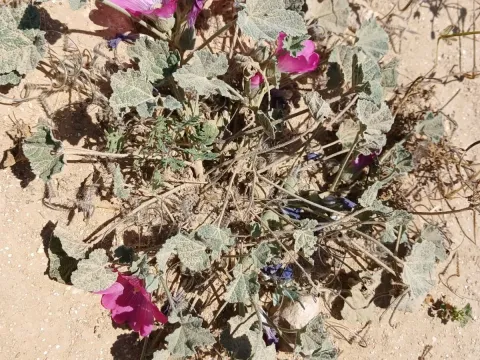
Alcea acaulis
Alcea acaulis
Alcea acaulis, commonly known as the stemless hollyhock, is a herbaceous perennial belonging to the Malvaceae family. Unlike its taller relatives, this plant primarily consists of a dense basal rosette of leaves, from which short flowering stalks emerge, providing a compact appearance.
What the section contains
Alcea acaulis
Native to the Eastern Mediterranean region, including parts of Turkey and the Levant, this plant has evolved to survive in semi-arid environments. It thrives in exposed areas with significant sunlight, making it highly suitable for xeriscaping or Mediterranean-style gardens.
The plant demands well-draining, fertile soil with a neutral to slightly alkaline pH. Good soil structure is essential because the root system is sensitive to waterlogging, which often leads to crown rot and poor development of the flowering stalks.
Regarding climate, Alcea acaulis prefers warm and temperate conditions. While it is quite drought-tolerant once established, it requires protection from excessive winter moisture, which can be more detrimental to the plant than low temperatures alone.
Economically and horticulturally, this species is highly valued for its ornamental versatility. It is particularly effective in rock gardens, border foregrounds, and containers where height restriction is necessary, offering large, showy blooms typical of the hollyhock genus.
Hollyhock rust (Puccinia malvacearum) is the most significant disease affecting Alcea acaulis. It manifests as distinctive orange spots on the underside of leaves, which can lead to premature defoliation if left untreated.
Powdery mildew can occur during periods of high humidity and poor air circulation. Maintaining proper spacing between plants is the most effective preventative measure to ensure that foliage dries quickly after rain or dew.
Aphids often target the developing flower buds during the spring growth phase. These pests can distort the bloom shape and spread viral pathogens, necessitating early monitoring and the use of insecticidal soaps if necessary.
Spider mites are common in hot, dry conditions where the plant is under stress. They cause stippling on the leaves, which eventually turn yellow and brittle, reducing the overall photosynthetic capacity of the plant.
Crown rot and root decay pose a constant threat when the soil remains too wet for extended periods. To prevent this, gardeners should ensure the plant is situated on a slope or in a gritty substrate that facilitates rapid drainage away from the crown.