
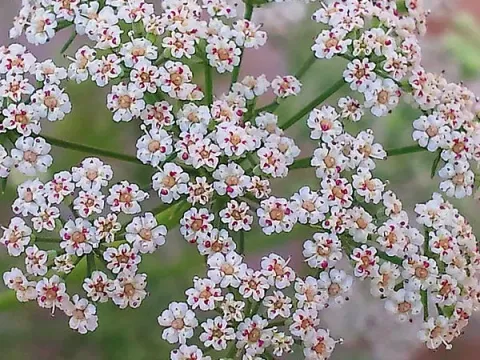
Ajwain
Carum ajowan
Ajwain, scientifically known as Trachyspermum ammi, is an annual herbaceous plant belonging to the Apiaceae family. Seeds are sown directly into the prepared field once the soil temperature is consistently between 15 and 18 degrees Celsius, typically in mid-to-late spring.
What the section contains
Ajwain
Successful germination depends on maintaining steady soil moisture and protecting the field from late frost events. Seeds should be sown at a depth of 1–2 centimeters, as they are small and require close contact with soil particles to thrive.
Proper spacing is vital to prevent overcrowding, which can increase humidity around the stems and promote fungal diseases. A row-to-row spacing of 40–50 centimeters is recommended to provide adequate room for plant growth.
Once seedlings emerge, thinning is performed to maintain a spacing of 15–20 centimeters between plants in a row. This encourages vigorous branching and ensures each plant receives sufficient nutrients and light for maximum seed production.
Early-stage management includes diligent weed control, as young ajwain plants compete poorly with weeds. Keeping the field clear of weeds during the first weeks is essential for establishing a robust crop.
Ajwain originates from South Asian climates and thrives in hot, sunny environments with low humidity. High solar radiation is crucial for the biosynthesis of essential oils, particularly thymol, which gives the plant its distinctive pungent flavor.
The crop prefers fertile, well-drained loamy or sandy loam soils. Heavy soils that retain excess moisture should be avoided, as they can cause root suffocation and increase the risk of soil-borne pathogens.
While the plant is quite drought-tolerant once established, moderate irrigation is necessary during the vegetative phase and flower bud development. Excessive moisture during the flowering period can reduce essential oil yields.
Ajwain is strictly a warm-season crop. It is highly sensitive to cold, and exposure to frost will result in immediate crop failure, limiting its cultivation primarily to summer months in temperate zones.
Selecting an open, well-ventilated field is important to minimize the impact of strong winds, which can lead to lodging of the plants and physical damage to the delicate umbels as they ripen.
The economic value of ajwain lies in its seeds (fruits), which are widely harvested for their high thymol content. Yield potential is heavily dependent on favorable climate conditions and the precision of farming practices applied throughout the cycle.
Under optimal agronomic conditions, a yield of 800–1200 kilograms of high-quality seeds per hectare can be achieved. Producers focus on maximizing the volatile oil content, which dictates the market price.
Strategic timing of the harvest is critical; collecting the seeds at the correct stage of maturity is vital for maintaining high essential oil levels and ensuring the seeds do not shatter and drop to the ground.
Post-harvest processing involves careful drying at temperatures not exceeding 40 degrees Celsius to prevent the loss of aromatics. Maintaining this balance is essential for producing high-grade spice products.
Ongoing genetic selection focuses on developing cultivars that offer uniform maturity and higher oil content, contributing to better overall profitability for agricultural enterprises specializing in aromatic seeds.
Powdery mildew is a common fungal disease affecting ajwain, especially in conditions where high humidity persists. It manifests as a white, dusty growth on foliage, which can significantly weaken the plant if left untreated.
Root rot and stem rot are serious threats, particularly in fields with poor drainage or over-irrigation. Ensuring soil aeration and adhering to crop rotation patterns are the most effective ways to mitigate these risks.
Various insects, such as aphids and leaf miners, can damage the crop by feeding on the sap or tissue. These pests not only weaken the plant but can also serve as vectors for secondary bacterial infections.
Spider mites can become a major concern during hot, dry spells. They feed on the underside of leaves, causing yellowing and premature leaf drop, which disrupts the photosynthetic capacity of the crop.
The preferred strategy for pest and disease management is an integrated approach, emphasizing biological controls, crop hygiene, and maintaining optimal field conditions to keep plants vigorous and resistant.
Harvesting usually occurs 120–150 days after sowing, once the umbels turn a brownish hue and the seeds reach their maximum hardness and fragrance. Proper visual inspection is essential to determine the exact maturity date.
Harvesting is ideally performed in the early morning or late evening when moisture levels are slightly higher, which helps keep the seeds attached to the stalks and reduces losses during collection.
The harvested plants are tied into bundles and left to cure in a shaded, well-ventilated area. This allows the seeds to continue maturing by drawing residual nutrients from the stems while protected from direct UV damage.
Threshing is carried out once the plant material is thoroughly dry. The seeds are then winnowed to remove chaff and debris, resulting in a clean final product suitable for commercial sale and processing.
To preserve the quality and aroma, the cleaned seeds should be stored in airtight containers within a cool, dry environment, preventing the volatilization of essential oils and protecting the crop from moisture.