
Atlantic pistachio
Pistacia atlantica x Pistacia vera
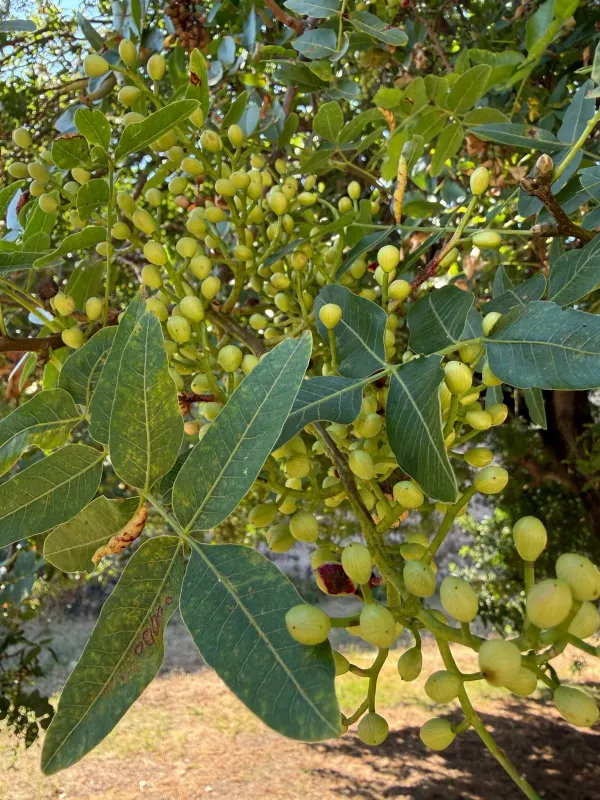
Description
Sowing dates
Atlantic pistachio is primarily propagated through seeds or by grafting commercial Pistacia vera varieties onto Pistacia atlantica rootstock. Seeds require stratification at low temperatures for 2–3 months to break dormancy.
Sowing in nurseries is carried out in spring once soil temperatures reach 12–15 degrees Celsius. Excellent drainage is essential for young seedlings, as they are highly sensitive to waterlogging during early development.
Grafting is performed during the active sap flow period to leverage the rootstock's resilience. This practice is standard in commercial orchards to ensure drought tolerance and vigorous tree growth.
Seedlings are transplanted to their permanent locations using wide spacing, typically 6 to 8 meters apart, to accommodate the wide crown development of mature trees.
Establishing young trees requires meticulous protection from weeds and rodents during the first few years. Proper site preparation before planting is vital for long-term orchard success.
Growing requirements
Belonging to the Anacardiaceae family, Atlantic pistachio is a remarkably hardy species. It is well-adapted to Mediterranean climates characterized by long, hot summers and mild, rainy winters.
The species prefers stony, calcareous, and well-drained soils. It exhibits poor tolerance for heavy, waterlogged soils, which can lead to root rot and severe physiological stress.
Optimal growth occurs at temperatures between 25 and 35 degrees Celsius. The tree demonstrates significant thermal adaptability, allowing it to thrive in regions with high diurnal temperature swings.
High light intensity is a fundamental requirement for Pistacia atlantica. Any degree of shading in the juvenile stage negatively affects stem thickness and overall tree vigor.
- Light: Full sun exposure is mandatory.
- Soil: Alkaline, stony, and well-drained.
- Water: Exceptional drought tolerance once established.
Yield
Productivity for trees grafted onto this rootstock typically begins between the 7th and 10th year. Peak yields are reached as the trees mature into their second or third decade.
The tree exhibits periodic bearing tendencies, though modern orchard management techniques, including balanced fertilization and irrigation, help stabilize annual production levels.
Pollination is exclusively wind-driven. Ensuring the presence of male trees in the orchard is necessary for successful fertilization and fruit set in female trees.
The nuts are drupes with a hard shell that dehisces upon maturity. The quality of the kernel is highly dependent on climate conditions during the late summer filling stage.
Pruning is essential to maximize light penetration into the center of the canopy, which stimulates fruiting wood development and increases the overall harvest volume.
Main diseases and pests
Insect pests, particularly psyllids, are a primary concern. They feed on young leaves and create galls that inhibit growth and reduce the tree's photosynthetic capacity.
Fungal pathogens causing leaf spots and wood rot are prevalent in poorly ventilated or excessively humid conditions. Sanitation of the orchard and proper tree spacing are key preventive measures.
Root rot, often caused by soil-borne fungi, remains a threat in heavy soils. Preventing soil saturation is the most effective management strategy against this pathogen.
Pistachio moth larvae can cause significant yield loss. Integrated Pest Management (IPM) practices, including the use of pheromone traps, are recommended for effective control.
Proactive monitoring and the use of authorized chemical or biological pesticides are necessary to mitigate damage during critical phenological stages of the pistachio tree.
Harvesting
Harvesting takes place when the fruit reaches physiological maturity, indicated by the easy separation of the hull from the hard shell. In modern farms, this is performed by mechanical shakers.
Timing is crucial; late harvesting risks exposing the fruit to bird damage and increased contamination from molds or secondary pathogens.
Immediate dehulling (removal of the outer flesh) after harvest is mandatory to prevent shell staining and fermentation, which drastically reduce the market value of the product.
Nuts must be dried to a moisture content of 5–7 percent. This process is usually conducted using low-temperature airflow in specialized facilities to preserve kernel quality.
Storage requires cool, dry conditions with adequate aeration to prevent the oxidation of natural nut oils, ensuring the product remains shelf-stable for an extended period.