
Sargent crabapple
Malus sargentii Rehder
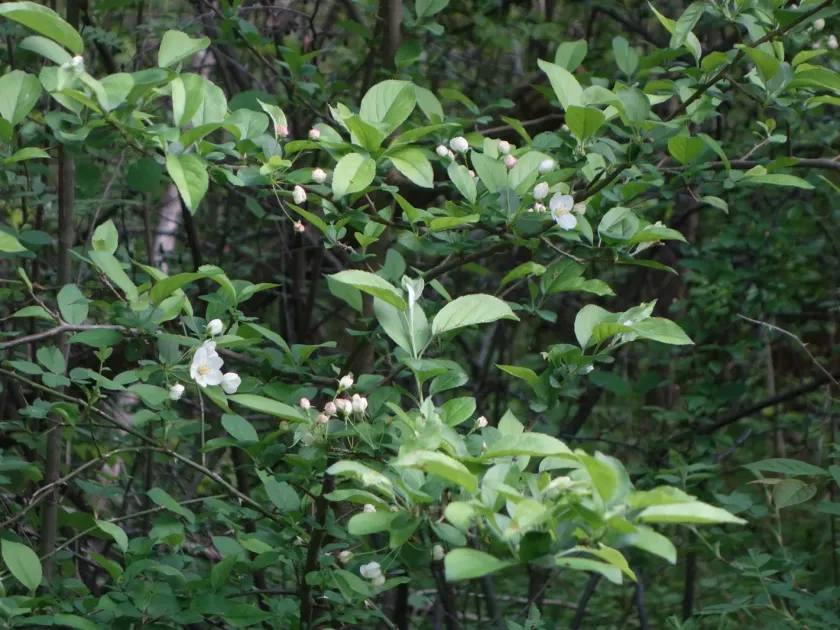
Description
Growing requirements
Sargent crabapple (Malus sargentii) is a deciduous shrub or small tree belonging to the Rosaceae family. Native to Japan, it is highly valued in horticulture for its spreading, horizontal branching habit and profuse white flowers that appear in spring.
The plant thrives in deep, well-drained, and fertile soils. While it can adapt to a variety of soil types, including sandy or clay soils, it performs best in slightly acidic to neutral environments with consistent organic matter content.
Full sun is essential for the best flowering performance and fruit production. Although it displays some tolerance for partial shade, planting it in direct sunlight helps maintain a dense, compact canopy and encourages vibrant autumn foliage coloration.
It is a remarkably hardy species, capable of withstanding harsh winter temperatures. During the establishment phase, however, it is important to ensure regular irrigation, as young roots can be sensitive to severe drought conditions in their first year.
Routine maintenance includes occasional structural pruning to remove crossing or dead branches. This practice not only improves the overall health of the tree but also enhances the natural aesthetic value of its characteristic wide, low-growing form.
Main diseases and pests
Sargent crabapple is known for having a good level of resistance to many diseases that typically affect the Malus genus. However, it can still be susceptible to apple scab under persistent high-humidity conditions, which can lead to leaf spot.
Powdery mildew is another common issue, especially during warm, humid weather. Maintaining proper spacing between plants and ensuring good air circulation are the most effective preventative cultural practices to reduce the incidence of fungal growth.
Insect pests such as aphids and leaf-rolling caterpillars may infest the foliage. While these rarely threaten the survival of the tree, they can cause cosmetic damage and reduce the plant's vigor if the population size becomes too large.
Scale insects can sometimes settle on branches, potentially weakening the host plant over time. Regular inspections of the bark during the dormant season can help identify these infestations early, allowing for targeted oil sprays to be applied.
Overall, chemical treatments should be used as a secondary measure to integrated pest management. Keeping the plant vigorous through proper watering and fertilization usually provides the tree with enough natural defense to withstand minor pest attacks.