
Siberian crabapple
Malus baccata (L.) Borkh.
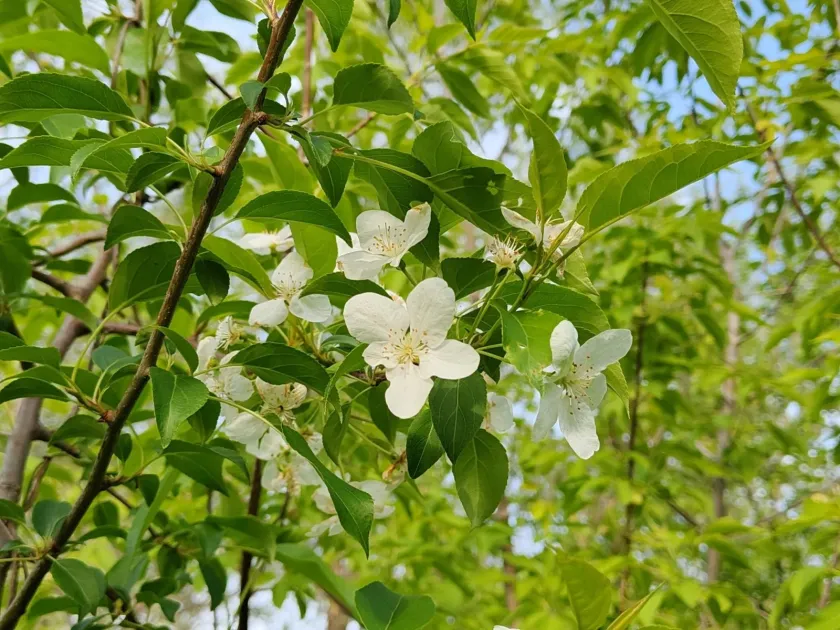
Description
Sowing dates
Sowing seeds of the Siberian crabapple is best performed in the autumn, immediately after harvesting the fruits, to ensure natural stratification in the soil. For spring planting, seeds must undergo cold stratification at 0 to 5 degrees Celsius for 3–4 months.
The seeds should be planted at a depth of 2–3 centimeters in well-drained, fertile soil. Maintaining consistent soil moisture is crucial during the germination phase to ensure a high success rate and strong seedling development.
If being raised for rootstock, seedlings are typically pricked out when the first pair of true leaves appears. This practice stimulates the development of a strong lateral root system, which is essential for grafting success in the future.
The growing medium should be light and rich in organic matter to encourage rapid early growth. Regular weeding and surface cultivation are necessary to provide the young trees with adequate oxygen and nutrient access.
After the first growing season, seedlings can be transplanted into nursery rows. Proper spacing is important to prevent competition and to allow each plant to develop a robust structure before grafting occurs.
Growing requirements
Malus baccata belongs to the Rosaceae family and is renowned for its extreme cold hardiness, making it an essential species for gardening in northern climates. It can survive harsh winters that would kill many other fruit trees.
This tree thrives in sunny, open locations but can tolerate partial shade. While it is adaptable to various soil types, it prefers well-drained loams with a neutral pH to ensure optimal health and longevity.
A critical requirement is avoiding waterlogged areas, as the root system is sensitive to excessive moisture. Proper site selection with good drainage is the most effective way to prevent root diseases.
The natural range extends across East Asia and Siberia, where the tree grows along riverbanks and forest edges. It is highly resilient to wind and environmental stressors once established.
Routine maintenance includes structural pruning in the early spring to establish a strong scaffold branch system. This ensures the tree can withstand heavy snow loads and strong seasonal winds.
Yield
The Siberian crabapple begins to bear fruit at approximately 5–7 years of age. The tree is exceptionally productive, often creating a heavy crop of tiny, bright fruits that persist long into the winter.
The fruit, which is about 1 centimeter in diameter, is rich in pectins and acids. Although usually too astringent for fresh consumption, these fruits are highly valued for making jellies, jams, and artisanal ciders.
The primary agricultural use of Malus baccata is as a rootstock. Because of its intense frost resistance, it is used to support and protect more sensitive dessert apple varieties in cold climate orchards.
In addition to its use as a rootstock, the tree is highly valued for its ornamental beauty. The massive bloom of white flowers in spring and the persistent autumn color make it a popular choice for public parks.
Selective breeding programs often use this species to introduce hardiness genes into new apple cultivars, helping to expand the boundaries of viable fruit production into colder regions.
Main diseases and pests
Apple scab is a common concern, particularly in regions with high humidity during the growing season. The disease can cause spotting on leaves and fruit, reducing the overall vitality of the tree if left untreated.
Powdery mildew may affect young, succulent growth during warm, humid spells. Pruning out infected shoots and improving airflow within the canopy are effective ways to manage this issue.
Pests like the codling moth and aphids can cause significant damage to the developing fruits and foliage. Integrated pest management strategies, including monitoring and timely insecticidal applications, are recommended.
Fire blight is a serious bacterial disease that requires strict sanitation. All infected branches must be removed promptly, and pruning tools should be sterilized after every cut to prevent spreading the pathogen.
- Apply dormant oil sprays in early spring to control overwintering pests.
- Rake and remove fallen leaves to reduce fungal spore load.
- Ensure proper spacing for trees to encourage maximum air circulation.