
Flowering crabapple
Malus domestica (Suckow) Borkh. x M. sargentii Rehder
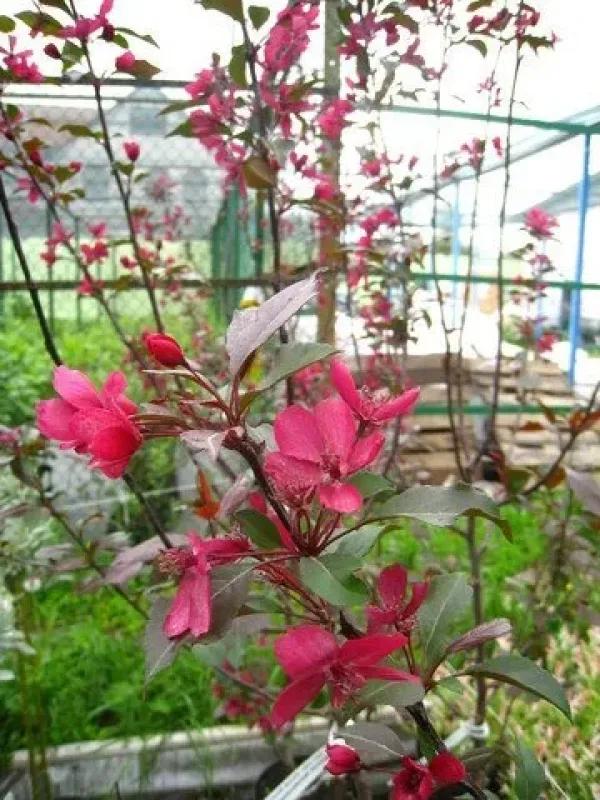
Description
Growing requirements
Flowering crabapple is a decorative hybrid belonging to the Rosaceae family. This tree is highly valued for its intense flowering period and compact, architectural growth habit, making it an excellent candidate for urban landscapes.
The species requires a site with full sunlight to partial shade and well-drained, nutrient-rich soil. It thrives in various soil textures, provided that the ground is not prone to persistent waterlogging, which could trigger root rot.
Climatic requirements are relatively flexible as the tree is known for its hardiness. It adapts well to temperate climates and is resistant to the stresses associated with urban environments, such as moderate pollution and wind exposure.
Cultural practices involve standard maintenance: regular pruning is essential to maintain tree shape and remove deadwood. Mulching around the base helps maintain soil moisture, while balanced fertilization supports robust foliage development.
Landscape utility is the primary focus for this plant. It is widely used in residential gardens, parks, and institutional green spaces as a feature tree, providing seasonal interest through flowers in spring and colorful fruits in autumn.
Main diseases and pests
The species is susceptible to common pome fruit diseases, including apple scab, fire blight, and powdery mildew. Maintaining good air circulation within the canopy through proper pruning is the first step in integrated disease management.
Pest challenges typically include aphids, spider mites, and scale insects. Implementing a schedule of pest monitoring and using selective insecticides during early infestations effectively manages the population without damaging beneficial pollinators.