
Beautyberry (C. dichotoma x C. kwangtungensis hybrid)
hybrids between Callicarpa dichotoma (Lour.) K. Koch and Callicarpa kwangtungensis Chun
Description
Growing requirements
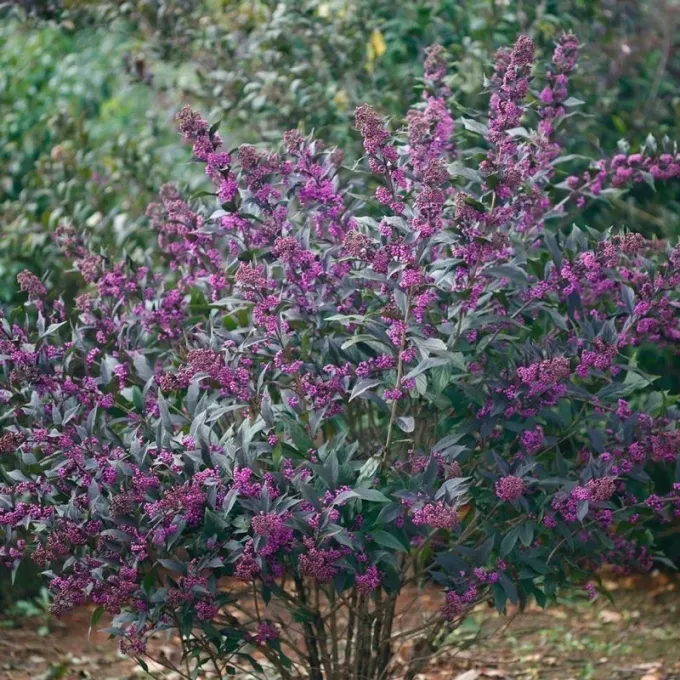
The beautyberry hybrid, resulting from the cross between Callicarpa dichotoma and Callicarpa kwangtungensis, is a member of the Lamiaceae family. It is prized in ornamental horticulture for its spectacular clusters of glossy, purple berries that persist into the late autumn.
This shrub thrives in locations with full sun to partial shade, sheltered from harsh, drying winds. It requires well-draining, fertile soil that maintains a slightly acidic to neutral pH, as the root system is highly sensitive to waterlogging during the dormant season.
Cultivation practices involve maintaining adequate soil moisture during the growing season, particularly during the first few years of establishment. In regions with colder climates, protecting the root zone with organic mulch is essential to prevent frost damage to the roots.
Pruning is a vital aspect of maintenance, best performed in early spring before new growth appears. Selective removal of old or damaged branches encourages vigorous new growth, which is necessary for optimal fruit production and a compact, attractive habit.
Host-wise, this hybrid is exceptionally versatile in landscaping. It is often utilized as a focal point in borders or as a component in informal hedges, providing a distinct color contrast during the time of year when many other plants have already ceased their flowering cycle.
Main diseases and pests
While generally robust, the beautyberry hybrid can be susceptible to fungal infections, especially when planted in areas with poor air circulation or consistently high humidity. Leaf spot is the most common ailment under such conditions.
Pests such as aphids and spider mites may occasionally infest the foliage, particularly on new succulent growth. Regular monitoring is encouraged to identify infestations early before they significantly affect the aesthetic value of the shrub.
Integrated pest management strategies are recommended, including the use of horticultural oils or insecticidal soaps as primary treatments. These methods are effective while being relatively safe for beneficial garden insects when applied correctly.
To prevent disease spread, it is crucial to keep the base of the plant free of debris and fallen foliage. This practice minimizes the habitat for pathogens and pests that may overwinter in the garden environment.
Ensuring proper spacing during the planting phase is the most effective preventative measure against many fungal diseases. Sufficient room allows for maximum air movement, which keeps the foliage dry and healthy throughout the growing season.