
White-margined nightshade
Solanum marginatum L. f.
Description
Growing requirements
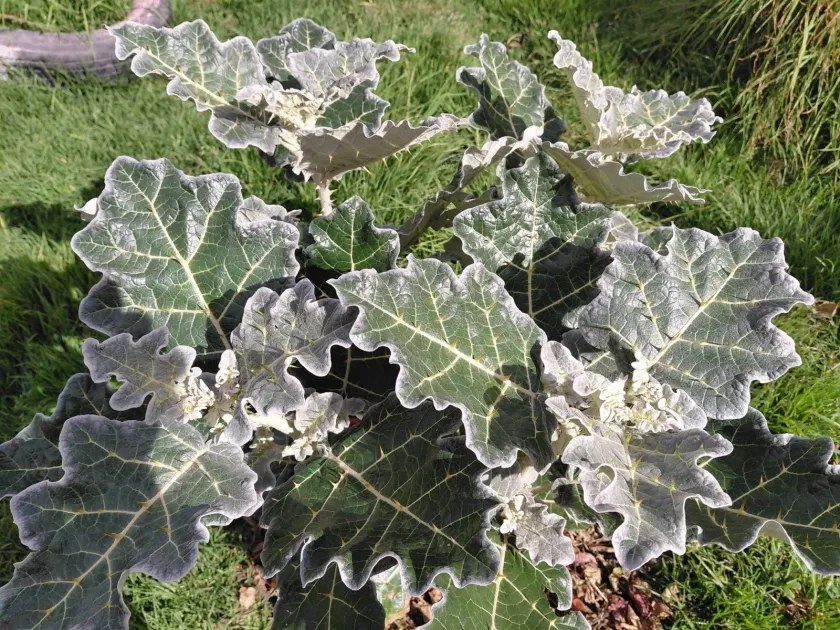
Solanum marginatum L. f., commonly known as the white-margined nightshade, is a perennial shrub belonging to the Solanaceae family. Originating from Ethiopia, the plant is distinguished by its silvery-white foliage and sharp spines covering the stems and leaves.
The plant thrives in well-drained, fertile soils with a neutral pH balance. It is highly sensitive to waterlogged conditions, which can lead to rapid decay of the root system; therefore, proper soil aeration is essential for successful cultivation.
Temperature requirements are strict, as the plant is not frost-tolerant. It requires consistent warmth and intense sunlight to maintain its characteristic foliage color and overall vigor. In temperate climates, it is best grown in containers for seasonal outdoor placement.
Cultural practices include moderate irrigation and the application of balanced fertilizers during the growing season. Pruning is necessary to keep the plant in a manageable shape and to promote air circulation, which is crucial for disease prevention.
Propagation is primarily achieved through seeds, which require a warm germination environment. Ensuring stable conditions for young seedlings significantly improves the establishment rate and resilience of the mature plant.
Main diseases and pests
The main threats to Solanum marginatum are common solanaceous pests, including spider mites and whiteflies. These pests thrive in dry environments and can cause severe foliage damage, leading to reduced photosynthetic capacity.
Fungal infections, such as late blight, are common if humidity levels are not controlled. Dark lesions appearing on leaves or stems are a clear sign of fungal activity, necessitating the immediate removal of affected parts and the use of appropriate fungicides.
Aphid infestations are frequently observed on young, tender shoots. These insects weaken the plant by extracting sap and can facilitate the transmission of viral diseases, which are particularly difficult to manage in woody ornamental shrubs.
Poor ventilation in greenhouse environments significantly increases the risk of mold and rot. Maintaining clear space between plants and regular cleaning of the growing area are fundamental preventive measures for any professional nursery.
Over-fertilization with nitrogenous compounds makes the plant more susceptible to pest attacks by producing lush, soft growth that is easily penetrated by sucking insects. A balanced nutrient approach is critical for maintaining natural immunity.