
Potato vine
Solanum laxum Spreng.
Description
Growing requirements
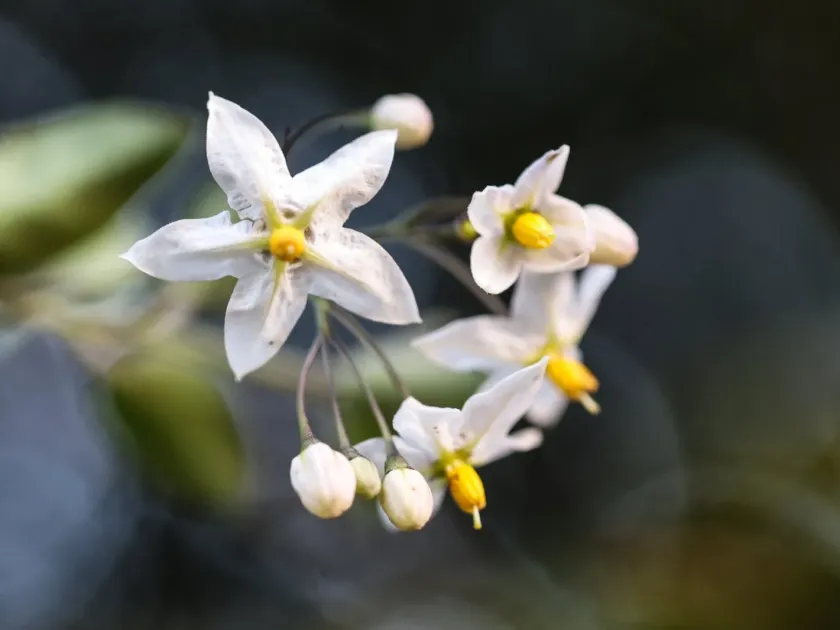
Solanum laxum, commonly known as the potato vine, is a vigorous evergreen climber belonging to the Solanaceae family. Native to South America, this plant is widely cultivated in warm climates for its attractive white, star-shaped flowers and dense foliage.
The plant requires full sun to partial shade for optimal development. In regions with intense summer heat, light afternoon shade can help prevent leaf scorch and ensure the plant maintains its vibrant green appearance throughout the peak growing season.
Regarding soil, the potato vine prefers well-drained, nutrient-rich soil with a slightly acidic to neutral pH. It is essential to ensure that the planting site has excellent drainage capabilities, as the roots are sensitive to waterlogged conditions.
Cultural practices involve providing a sturdy trellis, fence, or arbor for the vine to climb. Regular pruning is necessary to maintain the desired shape and size, typically performed in late winter or early spring to encourage new, flower-bearing growth.
Maintenance also includes consistent moisture during the growing period. Although established plants can tolerate short periods of drought, container-grown specimens require more frequent watering to prevent the soil from drying out completely.
Main diseases and pests
The most common pests affecting Solanum laxum include aphids, whiteflies, and spider mites. These pests thrive in dry environments and can cause significant damage if left untreated, often leading to stunted growth and yellowing leaves.
Disease issues are usually associated with poor environmental conditions, such as high humidity and lack of air circulation. Fungal infections, including powdery mildew, may occur if the foliage remains damp for extended periods, necessitating better spacing or specialized fungicides.