
Chilean nightshade
Solanum chilense (Dunal) Reiche
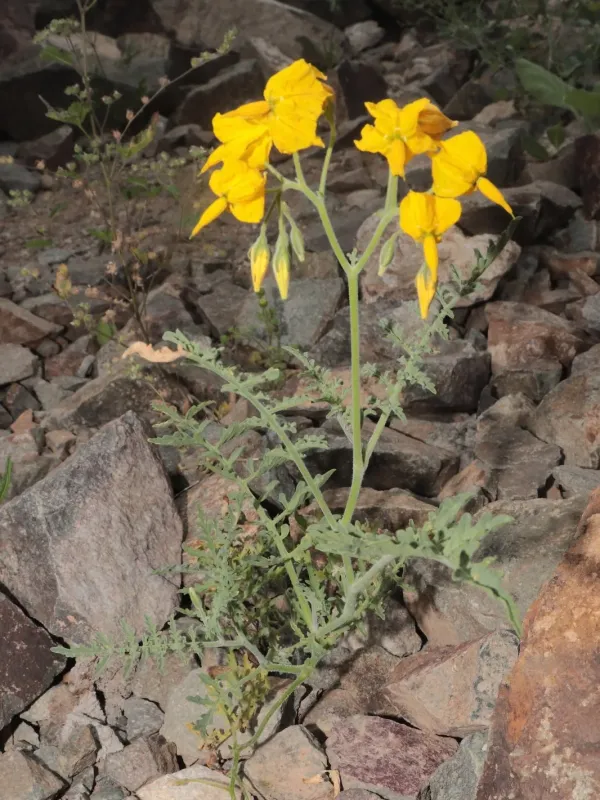
Description
Growing requirements
Chilean nightshade (Solanum chilense) is a perennial wild species belonging to the Solanaceae family. It originates from the arid coastal regions of Peru and Chile, where it has evolved to thrive in environments with extremely limited water availability and high salinity.
The plant exhibits significant biological adaptations, such as deep taproots and silver-grey, pubescent foliage that minimizes water loss. This morphology allows it to persist on steep, stony slopes where other related species would struggle to survive.
To cultivate Solanum chilense successfully, high light intensity is essential throughout the entire growth cycle. It demands well-draining, aerated substrates, as the species is highly susceptible to root decay when exposed to waterlogged or overly compact soils.
The optimal temperature range for this species is between 20°C and 28°C. It is particularly noted for its remarkable ability to withstand salt stress, making it an invaluable resource for scientists developing salinity-tolerant tomato cultivars for global agriculture.
Given its native habitat, the Chilean nightshade does not tolerate frost and requires protection if cultivated in temperate zones. Proper ventilation is mandatory to prevent high humidity, which can hinder the plant’s natural physiological processes.
Main diseases and pests
The species is primarily threatened by fungal pathogens that flourish in environments with poor air circulation. Downy mildew and various types of root rot can quickly compromise the plant's health if the substrate moisture levels are not strictly managed.
Insect pests, such as whiteflies and spider mites, are frequent threats in greenhouse environments. These pests not only weaken the plant directly but also act as vectors for various viral diseases that can severely impact the vigor of wild nightshade populations.
Viral pathogens, including the tomato mosaic virus, can spread rapidly if sanitary protocols are not strictly followed. Regular cleaning of equipment and isolation of new plant material are critical practices for maintaining a healthy nursery or collection.
Early signs of distress often manifest as yellowing leaves or wilting, which should be investigated immediately to determine if the cause is biotic or abiotic. Prompt removal of infected tissues is a necessary measure to contain any spreading diseases.
Breeding programs leverage the inherent genetic diversity of Solanum chilense to identify genes that confer resistance to these common pathogens. Understanding the interactions between the plant and its environment is key to minimizing threat impact.