
Galapagos tomato
Solanum galapagense S.C. Darwin & Peralta
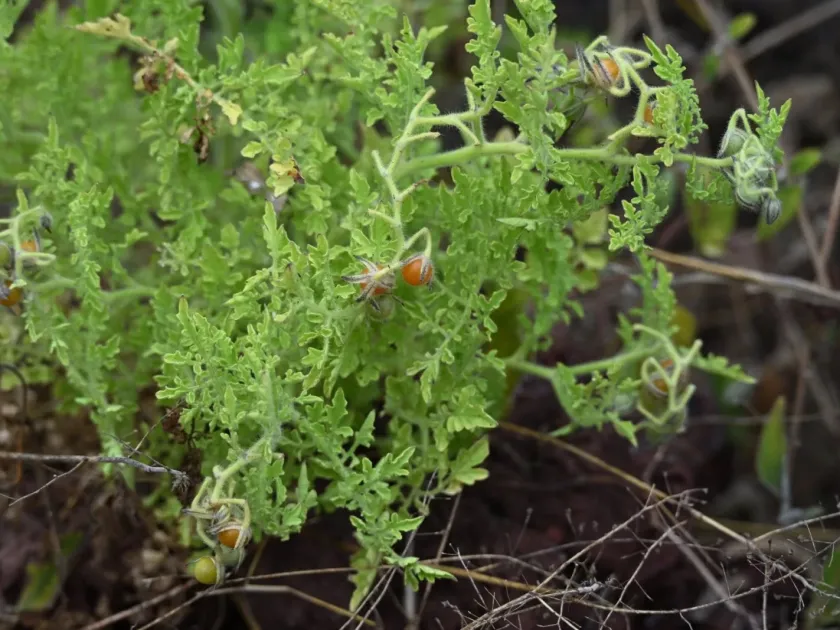
Description
Growing requirements
The Galapagos tomato (Solanum galapagense) is a wild member of the Solanaceae family native to the Galapagos Islands. This species is world-renowned among botanists for its exceptional ability to thrive in saline environments and on volcanic soil.
Botanically, it is characterized by dense trichomes (hairs) on its foliage and stems, which provide protection against harsh environmental conditions. The plant has a sprawling growth habit, adapting well to the rocky landscapes of its native habitat.
Regarding cultivation requirements, Solanum galapagense demands full sun and well-drained, porous soils. It is not grown for commercial fruit production, but rather as a critical genetic resource for plant breeders seeking to develop salt-tolerant crops.
The species is highly sensitive to frost and requires consistently warm temperatures to survive. While it thrives in the unique climate of the Galapagos, maintaining it in other regions necessitates greenhouse conditions with careful humidity control.
Agricultural use of this tomato is focused strictly on research and hybrid development. Its genome contains specific alleles that confer resistance to abiotic stresses, making it a valuable asset for global agricultural science.
Main diseases and pests
Like many species within the Solanum genus, the Galapagos tomato is susceptible to various fungal pathogens. Late blight and powdery mildew represent the most significant threats to its survival in greenhouse settings.
Pests such as whiteflies and spider mites are persistent challenges that can quickly colonize the plant. These insects not only damage tissue but can also act as vectors for debilitating viral diseases.
Soil-borne pathogens, including Fusarium wilt and nematodes, pose a severe risk to the root system. Proper sterilization of potting media and the use of resistant rootstocks are essential strategies to mitigate these threats.
Bacterial spot and speck can compromise the health of the leaves, especially when the plant is subjected to poor air circulation. Ensuring a dry leaf surface and balanced spacing helps to reduce the incidence of these infections.
Integrated pest management (IPM) is the recommended approach for maintaining healthy populations. This includes monitoring for early signs of infestation and utilizing biological control agents wherever possible to avoid harsh chemical exposure.