
Galapagos tomato
Solanum cheesmaniae (L. Ridley) Fosberg
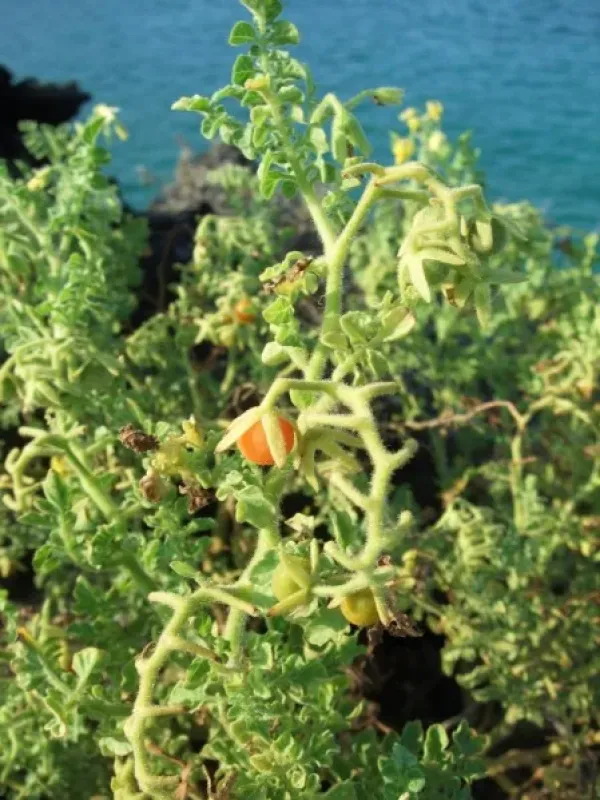
Description
Sowing dates
The Galapagos tomato is an endemic wild species that does not have defined industrial sowing schedules, as it is not grown as a standard agricultural crop.
In research and breeding stations, seeds are sown in a nutrient-rich substrate at temperatures between 22–25 degrees Celsius, ensuring high light levels to prevent seedling etiolation.
Seedlings of this species are characterized by high growth energy, though due to their wild origin, they may require scarification or removal of the seed coat for uniform germination.
The seedling development phase is longer compared to domesticated tomatoes, which is an adaptive evolutionary trait for survival under resource-limited conditions on the Galapagos Islands.
When cultivated in controlled environments, sowing is usually planned for early spring to maximize the use of longer daylight hours for establishing a robust root system.
Growing requirements
This species, belonging to the Solanaceae family, is a unique halophyte capable of tolerating high concentrations of salt in the soil and substrate.
The plant exhibits exceptional drought tolerance, a trait developed through centuries of evolution within the specific climatic zones of the Galapagos archipelago.
Successful growth requires well-drained, aerated soils with a neutral to slightly alkaline pH, which differs significantly from the requirements of most common tomato varieties.
The species is highly demanding regarding solar radiation intensity and cannot tolerate shading, which leads to vegetative degradation and the cessation of flowering.
The temperature optimum for vegetation is between 20–30 degrees, although the plant is capable of enduring short-term temperature fluctuations without losing viability.
Main diseases and pests
The primary advantage of Solanum cheesmaniae is its natural genetic resistance to a broad spectrum of viral and fungal diseases common to the Solanaceae family.
The plant possesses specific defensive mechanisms against pests, synthesizing alkaloids in its leaves and stems that effectively repel many insect herbivores.
Despite its high resistance, the species can be susceptible to root rot if grown in conditions of systematic overwatering and poor soil aeration.
In greenhouse settings, the plant is prone to spider mite infestations, requiring strict humidity control and regular prophylactic inspections to manage potential outbreaks.
The greatest threat to wild populations remains the introduction of invasive plant species that displace these tomatoes from their native habitats on the islands.
Harvesting
The fruits of the Galapagos tomato are distinctively small, comparable in size to cherries, and possess a unique, intense flavor profile with a sharp acidity.
Harvesting is performed exclusively by hand, as fruit maturation is asynchronous, which is a biological characteristic of this wild species.
The ripe fruits have a tough, dense skin, which ensures excellent transportability but limits their commercial appeal due to the very small size and low yield per plant.
The harvest period is extended over a long timeframe, making the plant more suitable for ornamental purposes or as a genetic repository for researchers.
Economic application of the species is focused primarily on plant breeding, where it serves as a critical source of genes for salt tolerance and disease resistance.