
Blue onion
Allium caesium Schrenk
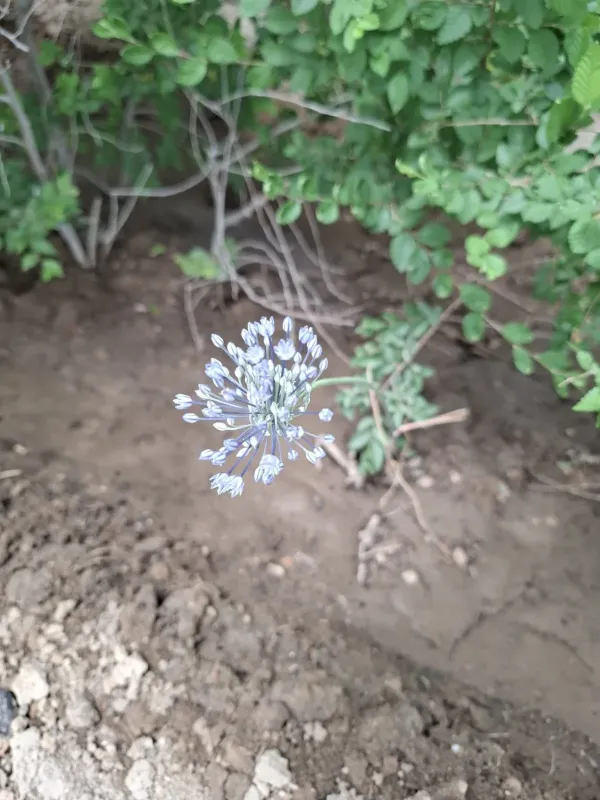
Description
Sowing dates
Sowing Allium caesium is best performed in late autumn to allow the seeds to undergo natural winter stratification, which significantly improves germination rates in the spring.
Seeds should be sown at a depth of about 1.5 centimeters in well-drained soil. The rows should be spaced 30 centimeters apart to provide sufficient room for the plants to establish during their first year of growth.
If starting seeds indoors, use a seed-starting mix and maintain cool temperatures. Transplanting into the garden should occur once the soil is workable, typically in early spring, once the risk of severe frost has passed.
Ensure that the seedbed is free from aggressive perennial weeds, as the young seedlings of the blue onion are slow to develop and can be easily outcompeted by weeds in the early stages.
Once seedlings have reached the 3-leaf stage, thinning might be necessary if the original sowing was too dense. A spacing of 10–15 centimeters between individual plants is ideal for long-term health.
Growing requirements
As a member of the Amaryllidaceae family, Allium caesium originates from the rocky mountain regions of Central Asia. It thrives in full sun and requires exposure to direct sunlight for the majority of the day to bloom effectively.
Soil requirements for this species are specific: it demands a sandy, gritty, and alkaline soil structure with excellent drainage. It will not tolerate heavy clay soils that hold moisture and lead to root rot.
The plant is exceptionally hardy and capable of surviving extreme temperature fluctuations. In its native habitat, it experiences cold winters and hot, dry summers, making it a robust addition to xeriscaped gardens.
Minimal irrigation is required once the plants are established. Overwatering is the most common cause of failure, so it is recommended to keep the site on the dry side throughout the active growing season.
No heavy fertilization is needed. In fact, providing too much nitrogen can lead to excessive leaf growth at the expense of bulb formation and overall plant vigor, which is typical for mountain-dwelling species.
Harvesting
Harvesting usually takes place in late summer after the foliage begins to yellow and wither naturally. This indicates that the energy has been transferred back into the bulb, signalling maturity.
Bulbs should be lifted carefully with a fork to avoid bruising or slicing the tissues, which can lead to rapid decay. It is best to dig on a dry day to ensure the soil falls away from the roots easily.
After lifting, the bulbs should be cured in a shaded, well-ventilated area for several days. This process hardens the outer skins and seals the neck, which is crucial for long-term storage.
Once cured, trim the dried tops and roots, and store the bulbs in a cool, dark, and dry environment. Proper air circulation is the key to preventing mold and bacterial outbreaks during winter storage.
Some gardeners prefer to leave a portion of the harvest in the ground if the site has perfect drainage, as Allium caesium is perennial and will reliably return the following season.