
Almond mushroom
Agaricus subrufescens Peck 1894
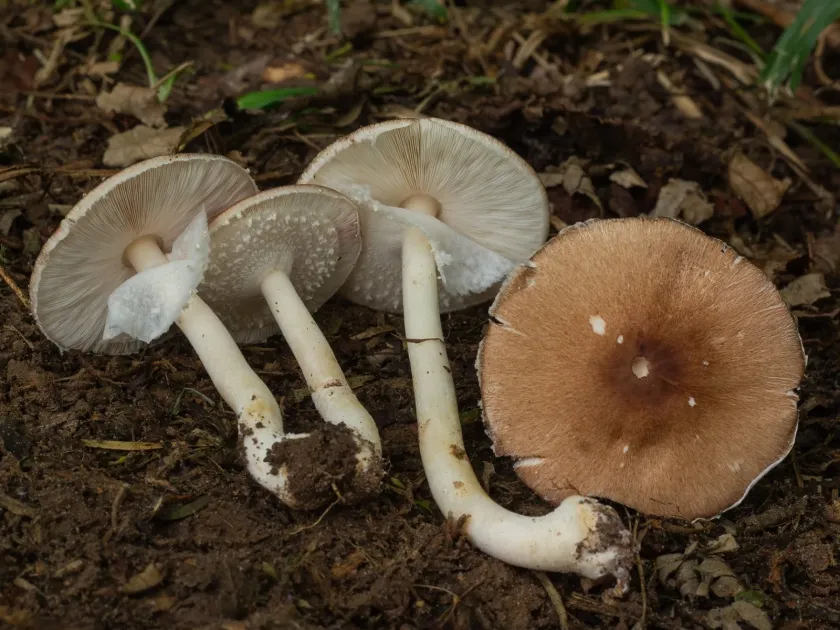
Description
Sowing dates
Sowing (inoculation) of the Almond mushroom is typically planned according to the climate of a specific region, as this species is warmth-loving. The optimal time is the spring-summer period, when air temperature consistently stays above 20°C.
High-quality grain spawn is used for planting, which is incorporated into a pre-prepared substrate by layering or mixing. It is crucial to ensure an even distribution of the planting material to facilitate rapid colonization of the substrate by the mycelium.
After inoculation, containers or beds are covered with plastic to maintain high humidity and create a greenhouse effect. During this period, strict hygiene is vital to prevent contamination of the substrate by competitive microflora.
The primary mycelium colonization process takes from 14 to 21 days depending on substrate temperature. Once the surface is fully covered, a casing layer is applied to stimulate the initiation of fruiting bodies.
Regulating planting schedules allows for planning the harvest in several waves, making the cultivation of Agaricus subrufescens a commercially viable project with the right microclimate management.
Growing requirements
The Almond mushroom belongs to the Agaricaceae family and requires specific conditions for development. Unlike the common button mushroom, this species prefers warmer temperatures, growing ideally in the 24°C to 28°C range.
Successful cultivation requires a nutritious substrate consisting of fermented compost that has undergone pasteurization. A mixture of cereal straw, poultry manure, and gypsum is commonly used as the foundation.
Air humidity in the growing room should be maintained at 80–85%, and effective ventilation is essential. Stagnant air leads to the development of pathogenic molds and reduces the commercial quality of the mushrooms.
Light is not a mandatory factor for this crop, although moderate diffused light promotes proper development of fruiting bodies. Nevertheless, primary focus should be placed on maintaining a stable thermal regime.
The pH of the casing soil should be neutral or slightly alkaline. Using a mixture of peat with chalk or dolomite flour allows for an optimal pH for active mycelium growth and the formation of mushroom pins.
Yield
The yield of Agaricus subrufescens directly depends on the quality of the spawn and the precision of the agricultural technology. Under optimal conditions, up to 15–20 kilograms of fresh produce can be harvested from one square meter.
Fruiting occurs in "waves," with typically 3–4 distinct periods of active mushroom growth. Breaks between waves are necessary to allow the mycelium to recover and for re-moistening the casing layer.
The first wave is usually the most productive, accounting for up to 50% of the total yield. Subsequent harvests gradually decrease in volume, which is a normal biological process for this species.
To increase output, it is recommended to supplement the casing layer with nutrients after each harvested wave. It is important to monitor moisture levels to avoid provoking mycelium rot.
Commercial efficiency is achieved through a short growing cycle and high consumer demand for this species, which is valued not only for its taste but also for its unique medicinal properties.
Main diseases and pests
The main threats to the Almond mushroom are fungal diseases such as "green mold" (Trichoderma) and "dry bubble" (Lecanicillium). These spread rapidly under poor ventilation and excessive moisture conditions.
Among pests, sciarids (fungus gnats) and phorids cause the most damage. Their larvae can completely destroy the mycelium in the substrate by boring tunnels within the fungal mass and the developing pins.
Mites also pose a serious threat, especially in the high-temperature conditions required for this species. They can carry disease spores and damage the fruiting bodies, making them unsuitable for market.
Prevention includes strict adherence to sanitary standards: regular disinfection of rooms and equipment. Using only high-quality, heat-treated compost significantly reduces the risks of infection.
If the first signs of pests are detected, affected areas should be immediately isolated and treated with permitted biological protection agents. Chemical pesticides are discouraged due to the short growth cycle of the fruiting bodies.
Harvesting
Harvesting begins when the mushroom cap reaches the desired size but has not yet fully opened. At this stage, the cap edges are tightly pressed against the stem, ensuring maximum shelf life.
Mushrooms are best harvested by gently twisting them while holding the stem. It is important not to leave stem fragments in the substrate, as they quickly rot and become a source of infection for the next wave.
After harvest, the fruiting bodies should be cleaned of casing soil residues and placed in a cool environment. A temperature shock immediately after harvesting helps maintain the freshness and firmness of the mushroom's structure.
Sorting is performed immediately after harvest, separating mushrooms by size and degree of damage. Marketable produce must have a clean surface free of spotting or mechanical damage.
For fresh market sale, mushrooms are packed in perforated containers that provide sufficient gas exchange. Produce must be stored at temperatures between +2°C and +4°C to extend shelf life for up to 5–7 days.