
Agaricus blazei
Agaricus blazei Murrill
Description
Sowing dates
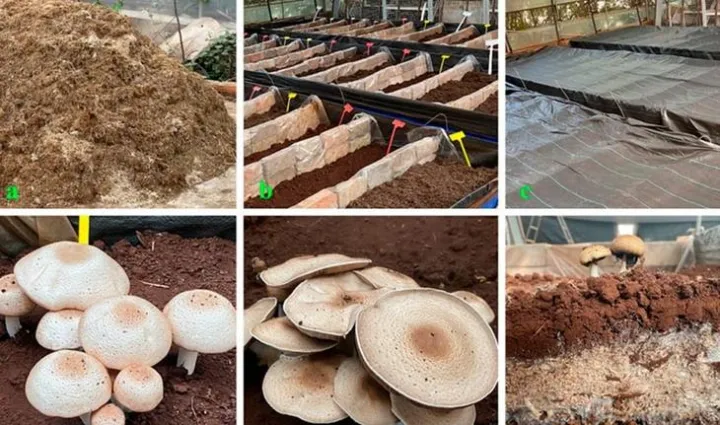
Agaricus blazei, a member of the Agaricaceae family, is a highly valued medicinal mushroom. The cultivation process begins with the inoculation of a well-prepared, pasteurized composted substrate with high-quality grain spawn.
Because this species is thermophilic, the ideal time for planting is during warmer seasons or in climate-controlled indoor facilities where temperatures can be kept stable between 24 and 28 degrees Celsius.
The incubation period, where the mycelium colonizes the substrate, typically lasts for 20 to 30 days. During this time, maintaining high humidity levels is crucial to prevent the substrate from drying out.
Once the mycelium has fully permeated the compost, a casing layer consisting of a soil-peat mixture is applied. This layer is essential for triggering the fruiting process and regulating moisture.
Hygiene is paramount during the sowing phase. Any contamination from molds or bacteria at this early stage can result in a total loss of the crop, necessitating strict laboratory-grade sterilization practices.
Growing requirements
Agaricus blazei has specific environmental demands, particularly regarding heat. Unlike common button mushrooms, it thrives best at temperatures between 20 and 25 degrees Celsius for optimal fruiting.
The substrate should be rich in nitrogen and carbon, typically composed of fermented wheat straw and organic fertilizers such as horse manure, which are then pasteurized to create a selective medium.
Proper ventilation is critical. The mushrooms respire significantly, and high levels of carbon dioxide can hinder development, causing the mushrooms to grow thin or deformed stalks.
Consistent moisture management is required. The casing layer must be kept damp through gentle misting, ensuring that the water reaches the substrate without causing waterlogging or compaction.
While light is not strictly required for growth, diffused light can enhance the natural coloration of the mushroom caps and improve their overall commercial quality.
Yield
The yield of Agaricus blazei varies depending on the intensity of the farming system used. In well-managed facilities, growers can achieve yields ranging from 15 to 20 kilograms per square meter.
Fruiting occurs in distinct flushes. Typically, a productive cycle consists of three major flushes, with rest periods in between to allow the mycelium to recover and replenish nutrients.
The first flush is usually the most bountiful, providing about half of the total harvest, while subsequent flushes allow for sustained production over several weeks.
Optimizing the nutritional content of the compost with supplements like soybean meal can boost yields, though this increases the risk of contamination and must be managed carefully.
Successful yield management relies on precise control of the microclimate, as even minor temperature fluctuations can significantly reduce the biological efficiency of the mushroom crop.
Main diseases and pests
Common biological threats include competitive molds like Trichoderma and Aspergillus, which can rapidly overgrow the substrate and stifle the mycelium of the Agaricus blazei.
Pests such as fungus gnats (Sciaridae) and phorid flies are major challenges. Their larvae feed on the developing mycelium and can cause structural damage to the mushrooms.
Bacterial blotch is a frequent disease observed when humidity is too high and air circulation is stagnant, causing dark, unattractive patches on the caps.
Preventative measures include rigorous sterilization of the growing room and the use of insect-proof netting to prevent pests from entering the production zone.
Regular monitoring of the facility for signs of infection allows for early intervention, protecting the overall health and yield of the mushroom beds.
Harvesting
Harvesting is performed when the caps reach their peak size but before the veil underneath breaks. At this stage, the mushroom retains the best flavor and medicinal properties.
Mushrooms are gently twisted out of the casing layer by hand. It is essential to avoid damaging the surrounding primordia (tiny baby mushrooms) to ensure future flushes remain healthy.
After harvesting, the empty spots in the casing layer should be backfilled with fresh casing material and lightly misted to promote the growth of the next flush.
Post-harvest handling is critical, as these mushrooms are delicate and prone to bruising, which quickly degrades their appearance and shelf life.
Collected mushrooms should be cooled immediately to 2–4 degrees Celsius to lock in freshness and prevent the caps from opening too rapidly after being picked.