
Agaricus bitorquis
Agaricus bitorquis (Quél.) Sacc. 1887
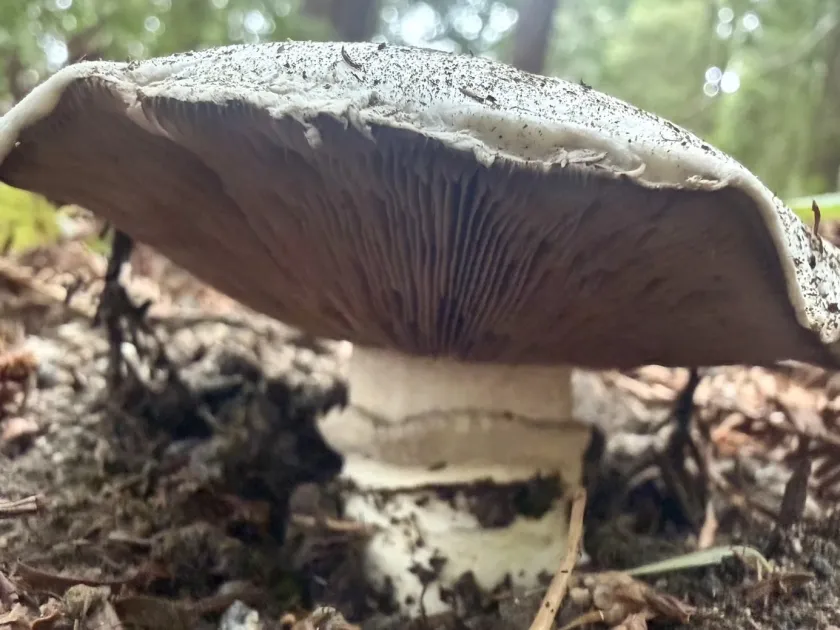
Description
Sowing dates
Agaricus bitorquis, also known as the spring agaric, belongs to the Agaricaceae family. Unlike the common button mushroom, this species is thermophilic and thrives in warmer environments, making it an excellent choice for summer production cycles.
The spawning process involves mixing the grain spawn into the fermented, pasteurized compost once the temperature has stabilized at 24–26°C. The colonization phase usually lasts around two weeks.
Casing the compost with a soil-like layer is a crucial step that promotes the formation of fruit bodies. This layer must retain moisture effectively while allowing sufficient air circulation for the developing mycelium.
This variety is known for its remarkable strength, allowing it to penetrate through thick casing layers easily. This biological advantage makes it highly efficient for industrial-scale cultivation in varied container types.
The entire cultivation cycle, from spawning to the end of the final harvesting wave, typically spans approximately six to eight weeks. High-quality spawn remains the most critical factor for consistent success.
Growing requirements
Agaricus bitorquis requires higher temperatures compared to most commercial varieties, preferring 25–28°C for vegetative growth. This allows growers to save significantly on climate control costs during warm months.
During the fruiting phase, temperatures should be lowered to 20–22°C. Adequate ventilation is vital, as this species is particularly sensitive to high carbon dioxide levels, which can cause misshapen fruit bodies.
Relative humidity needs to be maintained between 85–90% throughout the growth cycle. Precision in moisture management prevents the casing layer from drying out while avoiding waterlogging that could lead to rot.
The substrate should consist of well-composted organic matter with balanced nitrogen levels and a pH range of 7.0–7.5. Proper pasteurization of the compost is non-negotiable to eliminate competing pathogens.
While light is not essential for growth, providing diffuse light can sometimes improve the appearance of the mushrooms. The core of success lies in maintaining a stable microclimate without major fluctuations.
Yield
Under optimal conditions, the yield for Agaricus bitorquis can reach 15–20 kg per square meter of cultivation area. Efficiency depends heavily on the quality of the compost and the specific strain used.
Harvesting occurs in distinct waves, with the first and second waves generally providing the most significant volume of produce. Managing the recovery period between waves is essential for sustained productivity.
To maximize yields, growers should carefully monitor the environment after each harvest. Adjusting moisture levels and ensuring the mycelium has enough nutrients are key practices for stimulating subsequent waves.
The density of spawning significantly affects the overall output. A standard application rate is usually 500 grams of grain spawn per square meter to ensure uniform growth and colonization.
Water quality plays a silent but essential role in mushroom development. Using clean, non-chlorinated water prevents chemical stress on the developing fruit bodies and ensures higher product quality.
Main diseases and pests
Fungal diseases such as Verticillium (dry bubble) and Mycogone (wet bubble) are the primary threats, capable of devastating crops within a short timeframe if sanitation is neglected.
Pests like sciarid flies and phorid flies pose a significant risk, as their larvae burrow into the mycelium and damage the mushroom stems. They are also common vectors for introducing fungal pathogens.
Preventive strategies include strict adherence to farm hygiene, the use of filtered air systems, and regular disinfection of all tools. Preventing pest entry into the growing chamber is easier than treating an infestation.
- Routine cleaning of growing rooms and equipment.
- Using insect-proof netting on ventilation intakes.
- Isolating contaminated substrate immediately upon detection.
- Implementing authorized biological pest control agents.
Monitoring the crop daily allows for the early detection of issues, enabling growers to take quick corrective actions like adjusting ventilation or reducing ambient humidity.
Harvesting
The harvest should be conducted when the cap is still firmly attached to the stem, and the veil remains intact. This stage provides the best shelf life and aesthetic appeal for consumers.
Mushrooms should be carefully twisted out of the casing rather than cut. This minimizes the risk of leaving debris in the substrate, which could encourage the growth of pathogens and secondary infections.
Immediate post-harvest cooling to 2–4°C is essential to maintain freshness and prevent rapid deterioration. Mushrooms are highly perishable and lose quality quickly at room temperature.
After each harvesting wave, the casing layer should be gently raked and rehydrated to provide a fresh environment for the next wave. This helps maintain the vitality of the underlying mycelium.
Timely harvesting is essential, as the mushrooms can grow quite rapidly. Allowing them to over-mature results in lower culinary quality and significantly reduces the market value of the crop.