
Yunnan Torreya
Torreya yunnanensis
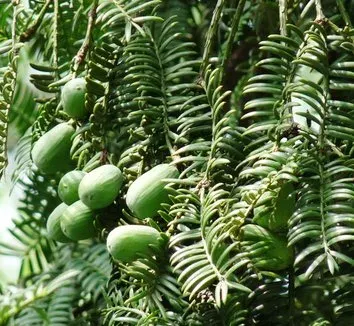
Description
Sowing dates
Propagation of Torreya yunnanensis in nurseries is primarily done through seeds. Since the seeds have a dormant period, they require cold stratification for 3 to 6 months before being sown in early spring.
To improve germination rates, the hard outer shell can be scarified. Seeds are sown in a light, well-draining substrate rich in peat, maintaining consistent moisture until seedlings emerge.
In natural forest settings, seeds germinate after passing through a winter season under a protective layer of leaf litter, which maintains the required humidity for the embryo.
Vegetative propagation via cuttings is possible but requires professional greenhouse management. Cuttings from young, vigorous trees are treated with rooting hormones and kept under high-humidity conditions.
Seedlings are generally kept in nursery conditions for two to three years until the root system is robust enough to withstand the stress of transplanting into the field.
Growing requirements
Yunnan Torreya belongs to the Taxaceae family and is native to the mountainous regions of Yunnan, China. It thrives in humid, temperate mountain climates with minimal exposure to extreme heat.
The species requires fertile, well-drained loam or sandy soils with a slightly acidic to neutral pH. Excessive soil moisture leading to waterlogging is a primary cause of root rot.
This tree is shade-tolerant during its juvenile stages but requires dappled sunlight as it matures to achieve optimal crown development and maximize seed yield.
Protection from cold, desiccating winds is essential for young specimens, as they are susceptible to cold damage before they establish a strong root system.
Applying organic mulch around the base of the tree helps maintain stable soil temperature and moisture levels, mimicking the natural forest floor environment.
Yield
Yunnan Torreya is primarily valued as a nut crop, with its seeds being rich in oils and nutrients. Trees are known for slow growth and start producing fruit only after 15 to 20 years.
The yield of individual trees increases significantly with age and proper maintenance. Mature trees can provide consistent annual harvests, although periodic fluctuations in yield can occur.
Harvesting takes place when the fruit turns color and the outer shell begins to split, indicating that the inner seed is fully mature and ready for collection.
The seeds are used in the food industry for high-quality oil production and are also processed for traditional medicinal applications due to their unique chemical composition.
Beyond the seeds, the wood of Torreya yunnanensis is highly prized for its durability, resistance to decay, and fine texture, making it a valuable timber resource.
Main diseases and pests
The primary threats to Yunnan Torreya include various fungal pathogens that thrive in humid environments with poor air circulation. Overwatering or lack of drainage significantly increases the risk of root pathogens.
Insect pests, such as conifer mites and scale insects, can infest the foliage, reducing the plant's photosynthetic capacity and leading to stunted growth if left unmanaged.
Habitat loss and fragmentation in its native range pose a serious threat to the species, necessitating careful conservation efforts and sustainable forestry practices.
Effective management includes regular crown thinning to improve airflow and the use of targeted biological controls to prevent the spread of pests and diseases.
Routine monitoring is essential, particularly during the growing season, to detect early signs of infestation and apply corrective measures before widespread damage occurs.
Harvesting
Harvesting requires care, as the fleshy outer husk can contain substances that may cause skin irritation; protective gloves are recommended for the process.
Immediately after harvesting, the outer husks should be removed to prevent fermentation and mold growth, which can quickly degrade the quality of the nuts inside.
The cleaned seeds must be dried thoroughly in a well-ventilated, shaded area. Proper drying is critical to ensuring the seeds do not rot during long-term storage.
Once dried, the nuts can be stored in cool, dry conditions with low humidity to maintain their nutritional profile and flavor until processing or market distribution.
Modern processing involves cracking the shell and extracting the kernel, which can be further roasted or processed to yield high-value culinary and industrial oils.